Maui Snorkeling Tours vs. Snorkeling on Your Own: Which Works Better for Families
This post contains affiliate links. If you book through them, we may earn a small commission at no extra cost to you. Read our full affiliate disclosure.
Maui snorkeling tours for families open up reefs like Molokini Crater that are reachable only by boat, with visibility that can stretch past 100 feet and fish density that shore spots cannot match. Shore snorkeling at beaches like Black Rock and the protected coves of South Maui is close to free, and a family of four can do it every morning of a week-long trip for the price of a few gear rentals. Green sea turtles graze in chest-deep water at several easy-access beaches, so a boat trip is not the only path to a standout wildlife encounter. Tours run on an early fixed schedule and cross open water, which matters for families with seasick-prone kids, while shore snorkeling lets you go when you want and stand up the moment anyone is done. For most families the sharpest move is one guided trip to the bucket-list reef and free shore snorkeling the rest of the week.
The choice between booking Maui snorkeling tours for families and grabbing your own gear at the beach comes down to one thing: where you want to spend your effort. A tour hands you a boat, a guide, and a reef you'd never reach on your own. A DIY morning hands you total freedom and a much lighter bill. Both can give your kids a magical first look at a green sea turtle gliding under their fins. The trick is matching the option to your family's ages, comfort in the water, and how much of your vacation budget you want to point at one activity.
Here's how the two stack up across the things that matter when you've got young kids, snorkel masks, and a finite supply of patience for tantrums on a boat deck. We'll compare guided Maui snorkeling tours for families against snorkeling on your own across cost, the marine life you'll see, safety, logistics, and the experience itself, then finish with a quick decision matrix so you can pick before you ever set foot on the island.
Maui Snorkeling Tours for Families: The Two Options in Plain Terms
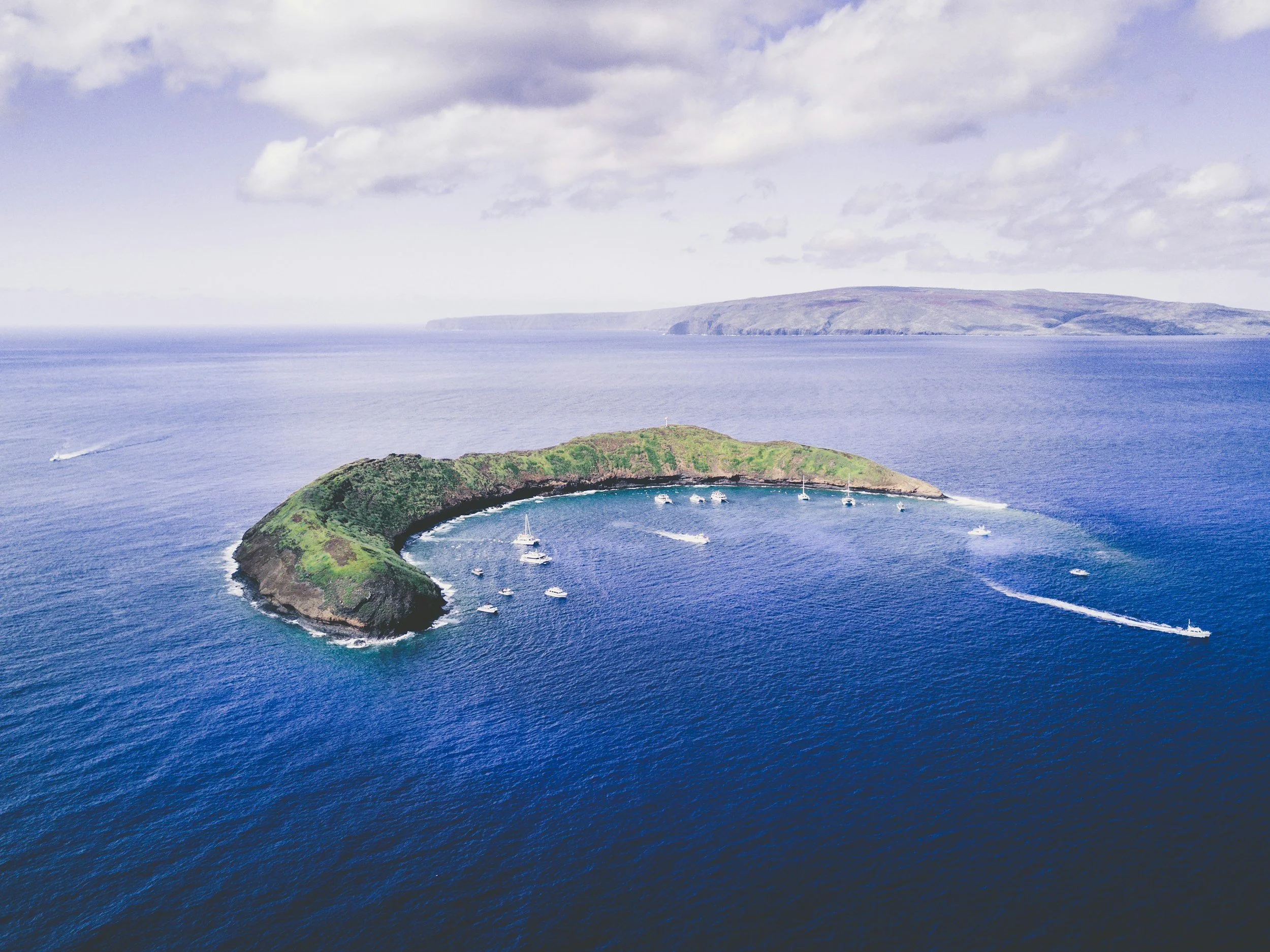
A guided snorkel tour means a half-day or full-day trip on a catamaran or smaller boat, usually leaving from Maalaea or Lahaina harbor. You're taken to a spot like Molokini Crater or the back wall of Lanai, fed breakfast or lunch, handed gear, and watched over by a crew the whole time. Prices land in the rough ballpark of $100 to $200 per adult depending on the boat and the season, with kid discounts that vary widely.
Going on your own means you drive to a shore-access beach, walk in from the sand, and snorkel at your own pace for free. You'll need your own masks and fins (or a cheap rental from a dive shop), reef-safe sunscreen, and a sense of where the calm, kid-friendly entry points are. We've broken down the best shore spots in our guide to the top Maui snorkeling spot with kids, which is worth bookmarking before you go.
Neither is the "right" answer for every family. A confident water family with strong swimmers leans one way; a family with a nervous five-year-old and a toddler leans the other. Let's get into the criteria.
Cost: what each option does to your vacation budget
Snorkeling from shore is close to free, and that's the headline. Once you own or rent masks, your only ongoing cost is sunscreen and maybe parking. A family of four can snorkel every single morning of a week-long trip for the price of a few rentals. If you're already watching the numbers on flights, resorts, and rental cars, this is the option that leaves room in the budget for a luau or a helicopter ride.
Tours are the bigger line item. Picture a family of two adults and two kids on a mid-range catamaran trip. Even with kid pricing, you're often looking at a few hundred dollars for a single morning. That buys real things: a captain who knows where the fish are that day, a reef you can't paddle to from the sand, and someone else hauling the gear. But it's one morning, and it's gone once you've done it.
The real math for most families is a blend. Do one tour for the bucket-list reef, then snorkel from shore the rest of the week for free. That way you get the showpiece experience without your whole snorkeling budget vanishing on day two.
What you'll see underwater
This is where tours pull ahead, and it's not close for certain spots. Molokini Crater, the half-sunken volcanic rim off the south shore, is reachable only by boat. On a calm morning the visibility there can stretch past 100 feet, and the fish life is dense in a way most shore spots can't match. If seeing that crater is a dream for your family, a tour is the only way to do it. Our walkthrough of Molokini snorkeling as a family covers what the morning feels like with kids aboard.
Shore snorkeling, though, is far from a consolation prize. Spots like Black Rock at Kaanapali, the reefs off Kihei, and the protected coves of South Maui hold parrotfish, butterflyfish, eels, and reliably good turtle sightings. Honu (green sea turtles) graze in the shallows at several easy-access beaches, and kids can spot them in chest-deep water. We map the best turtle-viewing beaches in our roundup of where to see turtles in Maui, and a few of them rival any boat trip for sheer wonder.
The real difference is consistency. A guide knows where the water is clearest on a given day; from shore, you're at the mercy of whatever the surf and wind are doing. Some mornings the visibility at a shore spot is gin-clear, other mornings it's stirred up and cloudy. A tour smooths that out by moving the boat to wherever conditions are best.
Safety and supervision with young kids
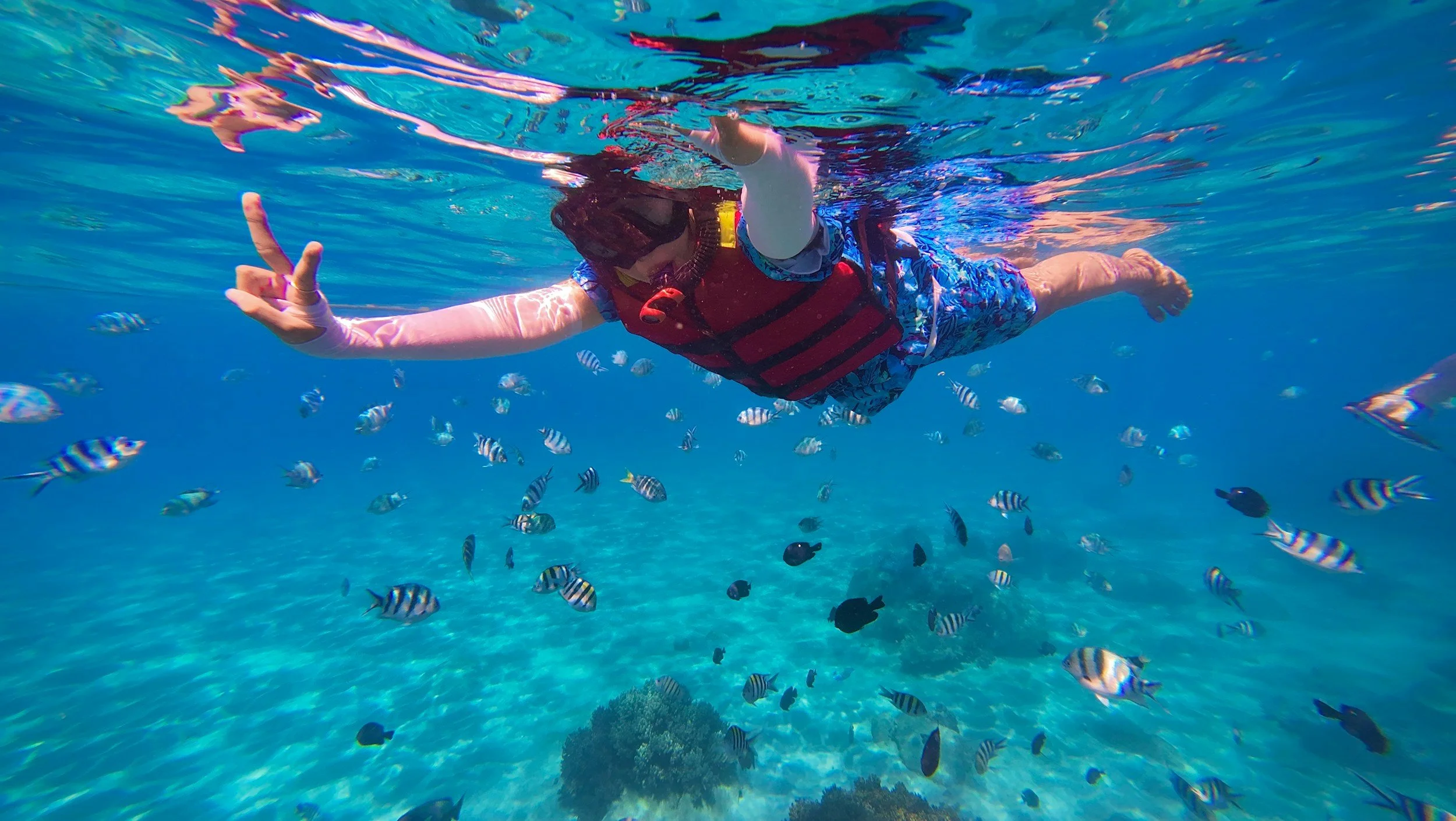
For families with weak or nervous swimmers, a tour is the safer setup, full of built-in backstops. The crew watches the water, hands out flotation vests and noodles, and many boats have a shallow swim step or a floating mat where a hesitant kid can get used to the mask before going deeper. If a child panics, there's a trained adult nearby whose only job is keeping everyone safe. That peace of mind is worth a lot when you're trying to manage two kids in open water at once.
Shore snorkeling puts all the supervision on you. That's fine for confident water families, but it means you can't watch a turtle while also keeping a thumb on a toddler. The upside is that you control the depth completely: you can stay in waist-deep water, walk out the moment anyone's tired, and there's solid ground under your feet at all times. No boat railing, no deep open ocean, no waiting for a crew's schedule.
Whichever you pick, currents and conditions deserve respect. Always check the water before you let kids in, and read up on the realities of Maui's ocean rather than the myths. Plenty of parents worry about the wrong things, which is exactly why we wrote about shark facts every parent should know before getting in the water. Knowing what's a genuine risk and what's just nerves makes the whole trip calmer.
Logistics and the patience tax
Tours run on someone else's clock, and that clock starts early. Most boats leave the harbor by 7 or 8 a.m. to catch the calmest morning water, which means waking sleepy kids, driving to the harbor, parking, and checking in well before sunrise feels reasonable. The payoff is that everything after that is handled. Gear, food, restrooms, and the route are all sorted, and you just show up. For a lot of families, trading an early alarm for a morning where nothing is your problem is a fair deal.
Snorkeling on your own is the opposite trade. You go whenever you want, leave whenever you want, and nap the toddler in between. But you carry the load: packing the masks, slathering sunscreen, finding parking at a popular beach (which fills fast in high season), and bailing out the second someone melts down. There's no waiting on a group of 40 strangers and no "we'll be back at the dock by 1."
The seasickness factor matters too. The boat ride to Molokini crosses open water, and some kids (and adults) get queasy. A child who's miserable on the deck won't enjoy the reef once you arrive. Shore snorkeling sidesteps that entirely. If anyone in your family struggles with motion, that alone can settle the decision.
The experience itself
A tour feels like an event. The boat ride, the crew's energy, the breakfast on the water, sometimes dolphins escorting the bow, the whole thing builds into a memory kids talk about for years. There's a sense of adventure in heading out to open water that a beach morning, lovely as it is, doesn't quite match. If you want one big, packaged, do-it-all ocean day, the tour delivers that.
Snorkeling from shore feels relaxed and repeatable. It folds naturally into a beach day, and kids can dip in and out between sandcastle breaks. There's no pressure to make the most of an expensive ticket, which paradoxically makes it easier to enjoy. Some of the best snorkeling memories happen on a quiet morning at a half-empty cove, no schedule, no crowd, just your family and a curious fish or two. We've folded both styles into our guide to outdoor activities in Maui with kids, which helps you slot snorkeling into a week that flows.
Which should you choose
Use this quick matrix to match the option to your family.
| If your family… | Lean toward a tour | Lean toward DIY |
|---|---|---|
| Has strong, confident swimmers | Optional | Yes |
| Has nervous or non-swimming kids | Yes | Only in shallow, calm coves |
| Dreams of seeing Molokini Crater | Yes (only way there) | Not possible |
| Is watching the budget closely | One tour max | Yes, every day |
| Has a kid prone to seasickness | Risky | Yes |
| Wants flexibility and nap-friendly timing | No | Yes |
| Wants one big bucket-list ocean day | Yes | No |
For most families, the sweet spot is doing both. Book one guided trip to Molokini or Lanai for the reef you can't reach otherwise, then snorkel from shore the rest of the week for free. You get the showpiece and the relaxed everyday version, and your budget survives. If money's tight or you've got a seasick-prone toddler, skip the boat and lean entirely on shore spots. You'll still see turtles, you'll still see reef fish, and you'll have more flexibility to follow your kids' moods.
Family-friendly Molokini snorkel tours we'd shortlist
South Maui: Molokini Snorkeling Adventure: a family-friendly catamaran from Ma'alaea with two snorkel stops, breakfast, and a deli lunch. A good fit if you want the full "big ocean day."
Molokini Crater Snorkeling Trip (2 hours, from Kihei): a short trip with gear and flotation included. The shorter time on open water is kinder to seasick-prone kids.
Molokini Crater & Turtle Town Snorkeling Tour (3 hours): two stops, including Turtle Town for a good shot at honu, with lunch on board.
The best snorkeling plan isn't the most expensive one. It's the one your kids enjoy enough to want to do again the next morning.
How to prep either way
Whichever route you choose, a few things make the day smoother. Bring reef-safe sunscreen (Maui law requires it, and it protects the coral your kids came to see). Pack rash guards so nobody crisps their backs while face-down in the water. Practice with masks in a pool or even the bathtub at home before the trip, so the first time a kid puts their face in salt water isn't also the first time they've worn a mask. And keep a snorkel-day checklist handy so you're not scrambling at the door; our free family beach day packing list covers most of what you'll want on the sand.
If you're still mapping out the broader trip, it helps to pair snorkeling with the island's other ocean wins — and that's exactly where Maui snorkeling tours for families fit in. Calm swimming beaches, easy turtle spots, and gentle reef entries are scattered across the south and west shores, and our overview of our favorite South Maui beaches shows which ones double as snorkel-friendly. Stack a couple of those into your week and the snorkeling almost plans itself.
Frequently asked questions
Are Maui snorkeling tours for families worth the money?
Maui snorkeling tours for families are worth the cost for reaching spots like Molokini Crater, because there's no other way to get there and the visibility and fish density are hard to match from shore. The value drops if your family is happy with the reef life at accessible beaches, which is very good. Most families get the best return by booking one tour for the bucket-list reef and snorkeling from shore for free the rest of the trip.
What age can kids start snorkeling in Maui?
Many kids can start around age four or five in calm, shallow water, especially with a flotation vest and a parent right beside them. Comfort matters more than a number. A child who's relaxed putting their face in the water at home will do far better than an older kid who's never tried a mask. Start in waist-deep water at a sheltered cove before attempting anything deeper.
Is shore snorkeling safe for young kids in Maui?
It can be, as long as you pick calm, protected spots and stay within arm's reach of younger swimmers. Check the surf and current before getting in, keep kids in shallow water, and get out the moment conditions look stirred up. The advantage of shore snorkeling is that you control the depth and can stand up anytime, which makes it forgiving for beginners.
When is the best time of day to snorkel in Maui?
Early morning, generally before 10 or 11 a.m., when the wind is lightest and the water is clearest. Trade winds tend to pick up as the day goes on, stirring up the surface and dropping visibility. That early calm is exactly why tour boats leave at dawn, and it's the same reason a shore snorkel right after breakfast beats one in the windy afternoon.
Do we need to bring our own snorkel gear or rent it?
For a tour, gear is almost always included, so don't bother packing it. For shore snorkeling, bringing your own masks and fins gives kids a better fit and avoids daily rental costs, but dive shops across the island rent gear cheaply if you'd rather travel light. A well-fitting mask makes or breaks a kid's experience, so test the fit before you rely on it.
Once you've decided which approach fits your crew, the next move is picking the actual spots and stitching them into your week. Start with the calm, turtle-friendly beaches, add one guided trip if Molokini is calling, and let the rest of your snorkeling unfold morning by morning. The best Maui snorkeling for families usually isn't one perfect day, it's a handful of easy ones your kids keep asking to repeat.