12-Day Costa Rica Itinerary for Families with School-Age Kids
Affiliate Links may be used on this website, at no additional cost to you. This means I may earn a commission if you make a qualifying purchase. There is no charge to you. Thanks for supporting this website!
Twelve days is the right length for a Costa Rica family trip because it adds a third region, Arenal, Monteverde, and Manuel Antonio, without turning the vacation into a driving marathon. The classic loop runs San José to La Fortuna to Monteverde to Manuel Antonio and back, with each leg a half-day drive and a completely different kind of day waiting at the end. School-age kids, roughly 6 to 12, are the best fit for the full three-region route, since they can hike, zip line, and stay engaged on a guided walk in a way toddlers can't and teens outgrow. Renting a 4x4 SUV beats private transfers on cost for most families, though mandatory liability insurance isn't included in the online quote. Lodging and food choices, not activities, drive the real cost of the trip, and tap water is safe across most of the country while sun, riptides, and mosquitoes are the actual risks worth planning around.
Twelve days is the sweet spot for Costa Rica with school-age kids, because it's the first trip length that lets you add a third region without turning your vacation into a driving marathon. Most families cram volcano and beach into a week and spend two of those days in the car. This Costa Rica itinerary for families gives you Arenal, a cloud forest, and the Pacific coast with real downtime built into each stop.
Below is a day-by-day plan you can follow exactly or shuffle to fit your flights. We've built it around kids roughly ages 6 to 12, with notes on how to flex it younger or older, plus driving times, lodging guidance by budget tier, and the logistics questions that always come up two weeks before departure.
A Costa Rica Family Itinerary: Three-Region Loop Minimizes Driving and Maximizes Variety
Costa Rica rewards families who pick three regions and stay put in each one. The classic circuit runs San José to La Fortuna (Arenal) to Monteverde to Manuel Antonio and back to San José. That loop works because each leg is a reasonable half-day drive, and each region offers a completely different kind of day: volcano and hot springs, cloud forest and hanging bridges, beach and wildlife park.
Here's the route with realistic drive times. Costa Rican roads are slower than the distance suggests, so pad everything by thirty minutes if you're stopping for bathrooms and snacks (you will be).
| Leg | Nights | Drive time | Road conditions |
|---|---|---|---|
| SJO airport to La Fortuna | 4 | roughly 3+ hours depending on traffic and stops; confirm via a mapping app before the trip | Paved, winding through mountains |
| La Fortuna to Monteverde | 2 | driving takes several hours; the boat-and-shuttle option is often faster — check current timing when booking | Last stretch is gravel and bumpy |
| Monteverde to Manuel Antonio | 4 | roughly 4 to 4.5 hours, though road conditions can change timing significantly | Rough until you hit the coastal highway, then smooth |
| Manuel Antonio to SJO | 1 (near airport) | about 3 hours, more with traffic | Paved highway most of the way |
If you'd rather trade the cloud forest for more beach time, swap Monteverde for an extra two nights on the coast or head north to Guanacaste instead. We'd keep Monteverde for kids 7 and up because the hanging bridges and zip lines land hard at that age. Younger than that, the long bumpy road in isn't worth it, and you're better off with the regional breakdown of where to base yourselves to pick an easier two-stop loop.
Rental car offers flexibility and beats private transfers on cost
Rent a car. For a family of four doing a three-region loop, a 4x4 SUV gives you the freedom to leave a waterfall when the kids melt down instead of waiting on a shuttle, and it's almost always cheaper than private transfers between every stop.
Two caveats that trip people up. First, Costa Rican rental agencies require liability insurance that isn't covered by your credit card, so the quote you see online is never the price you pay at the counter. Budget for the mandatory coverage and you won't feel ambushed. Second, download offline maps before you leave your hotel WiFi, because signal drops out on the mountain stretches.
Rent a car if: your kids are past the car-seat-hauling stage, you want to chase waterfalls on your own schedule, and at least one adult is comfortable with winding mountain roads.
Hire private drivers if: you're traveling with toddlers, someone gets carsick, or the idea of navigating an unfamiliar gravel road at dusk makes your stomach turn. Shared shuttles run between all the major tourist towns and cost less than private transfers.
Do both if: you want a driver for the long La Fortuna to Monteverde leg (the roughest one) and a car for the rest.
Book the car before you fly. Availability tightens fast in high season, and you can compare rental rates across the Costa Rican agencies rather than walking up to a counter in San José hoping for the best. If you're landing late, an airport transfer to your first night's hotel saves you from a three-hour mountain drive in the dark on day one.
Land near the airport and sleep off jet lag before driving
Fly into Juan Santamaría International (SJO) and do not drive to La Fortuna the same day. Flights from North America tend to land mid-afternoon, which means you'd be arriving in the mountains after dark on zero sleep with kids who've been in a plane since dawn.
Instead, book one night within twenty minutes of the airport in Alajuela. You'll eat an early dinner, swim in whatever pool the hotel has, and sleep. Day 2 you pick up the rental car rested and drive to La Fortuna in daylight, stopping at a roadside soda for casado and fresh fruit juice. That first stop is a fun introduction for kids: point at things, order badly, laugh about it.
Arrive in La Fortuna by mid-afternoon, get in the pool, and go to bed early. You've already banked a win because nobody is cranky.
La Fortuna packs the most adventure into four days
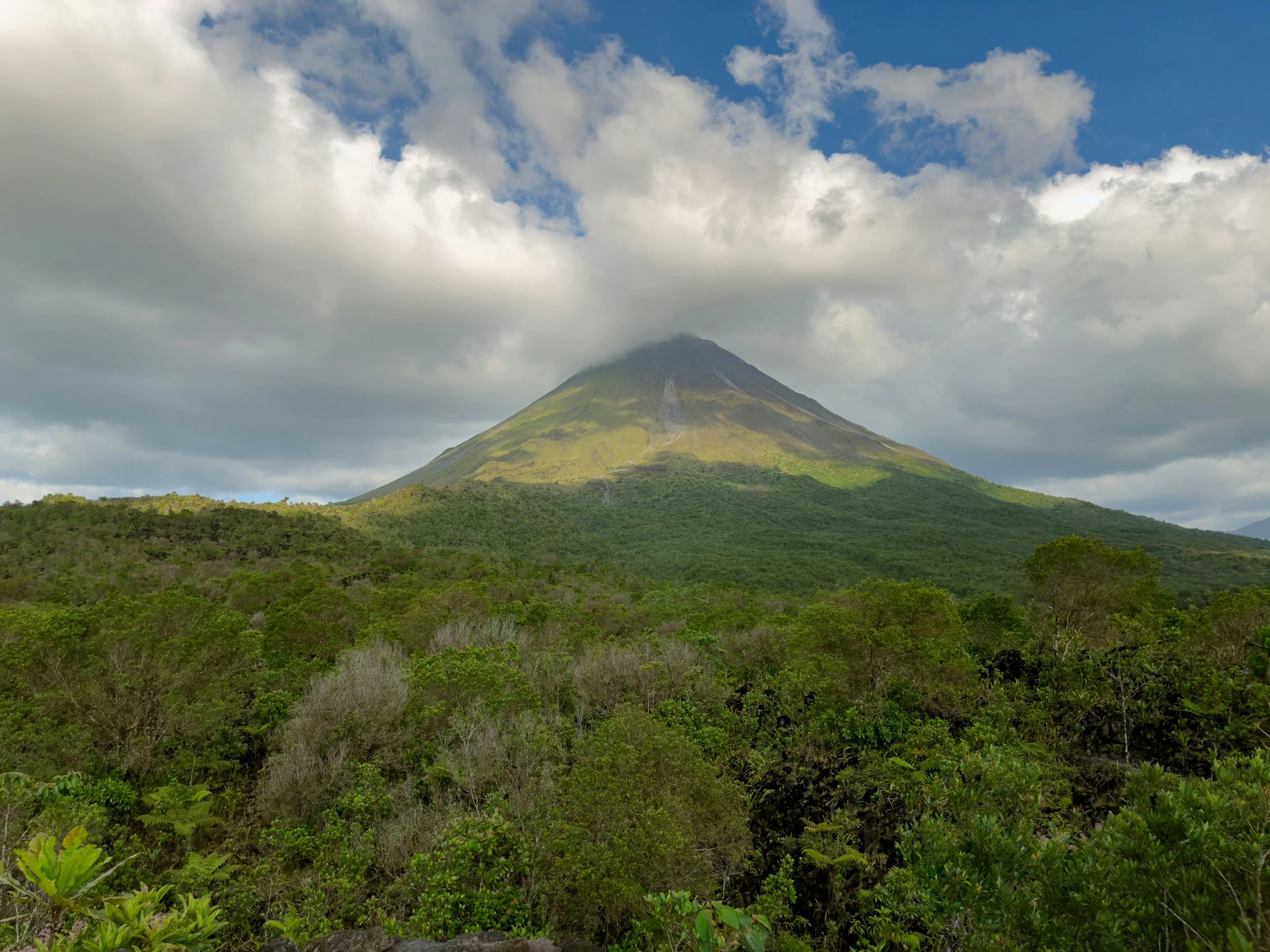
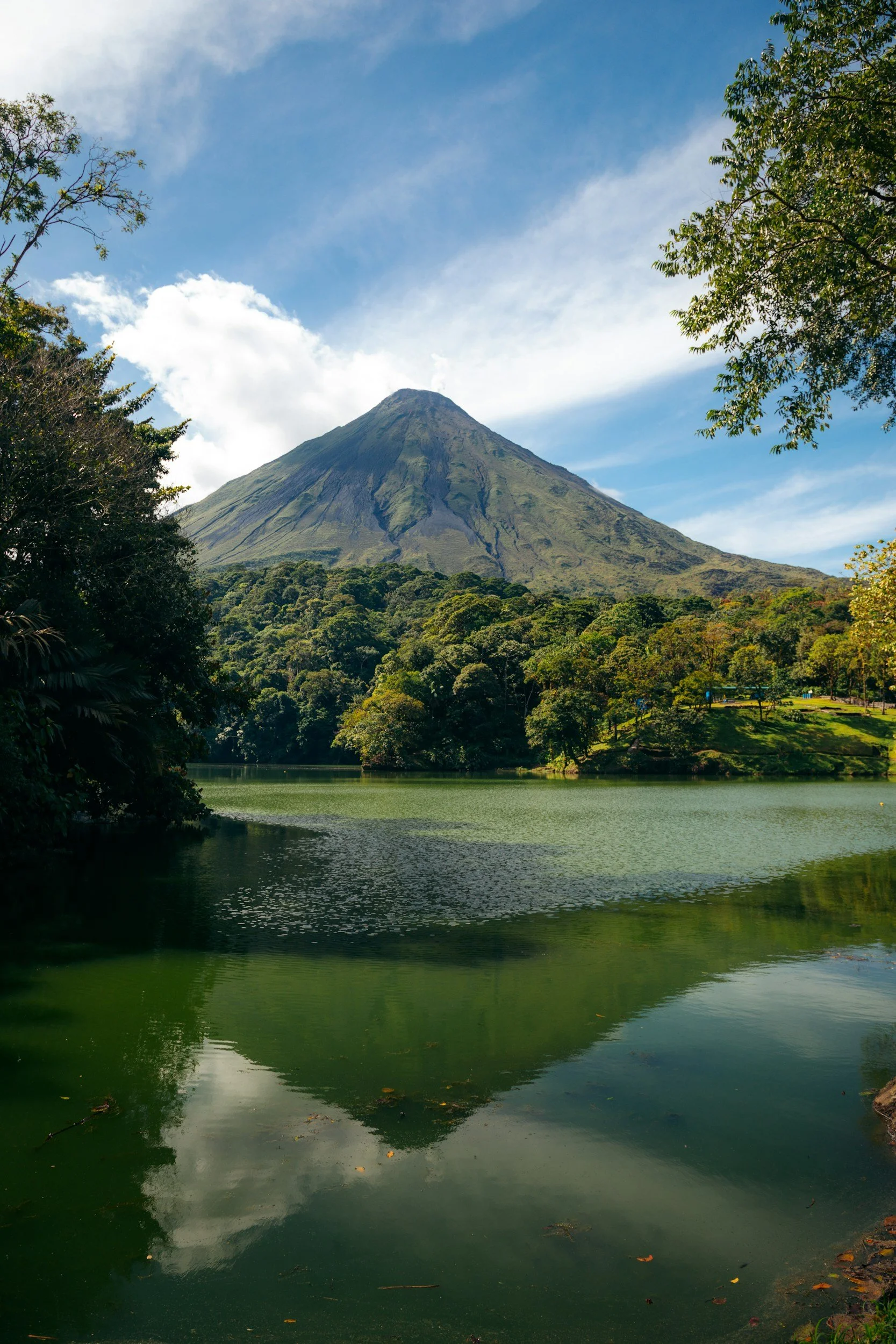
Four nights in La Fortuna sounds like a lot until you're there. This is the densest concentration of family adventure in the country, and the rhythm that works is one big activity in the morning, pool or hot springs in the afternoon.
Guides change wildlife walks into actual animal encounters
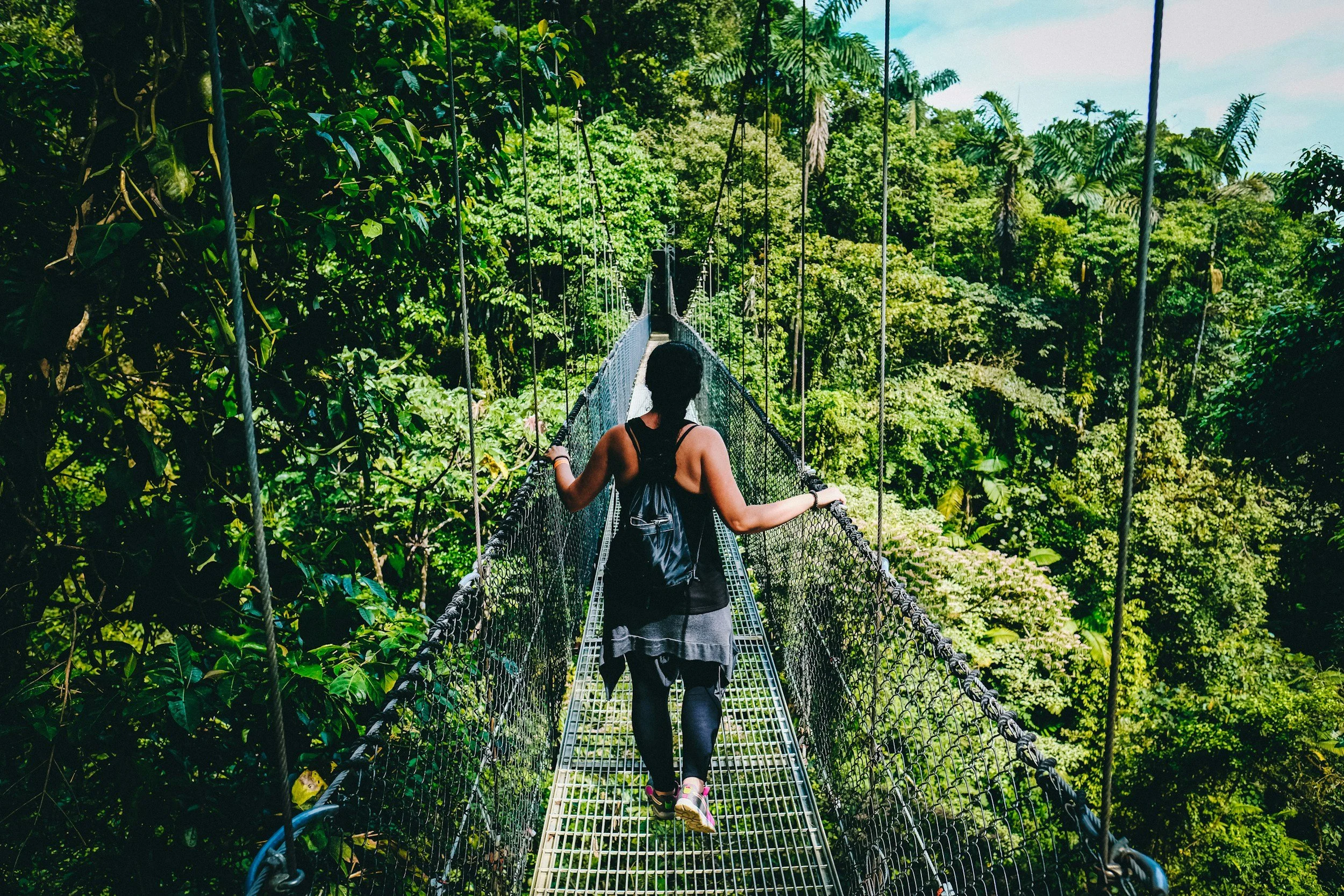
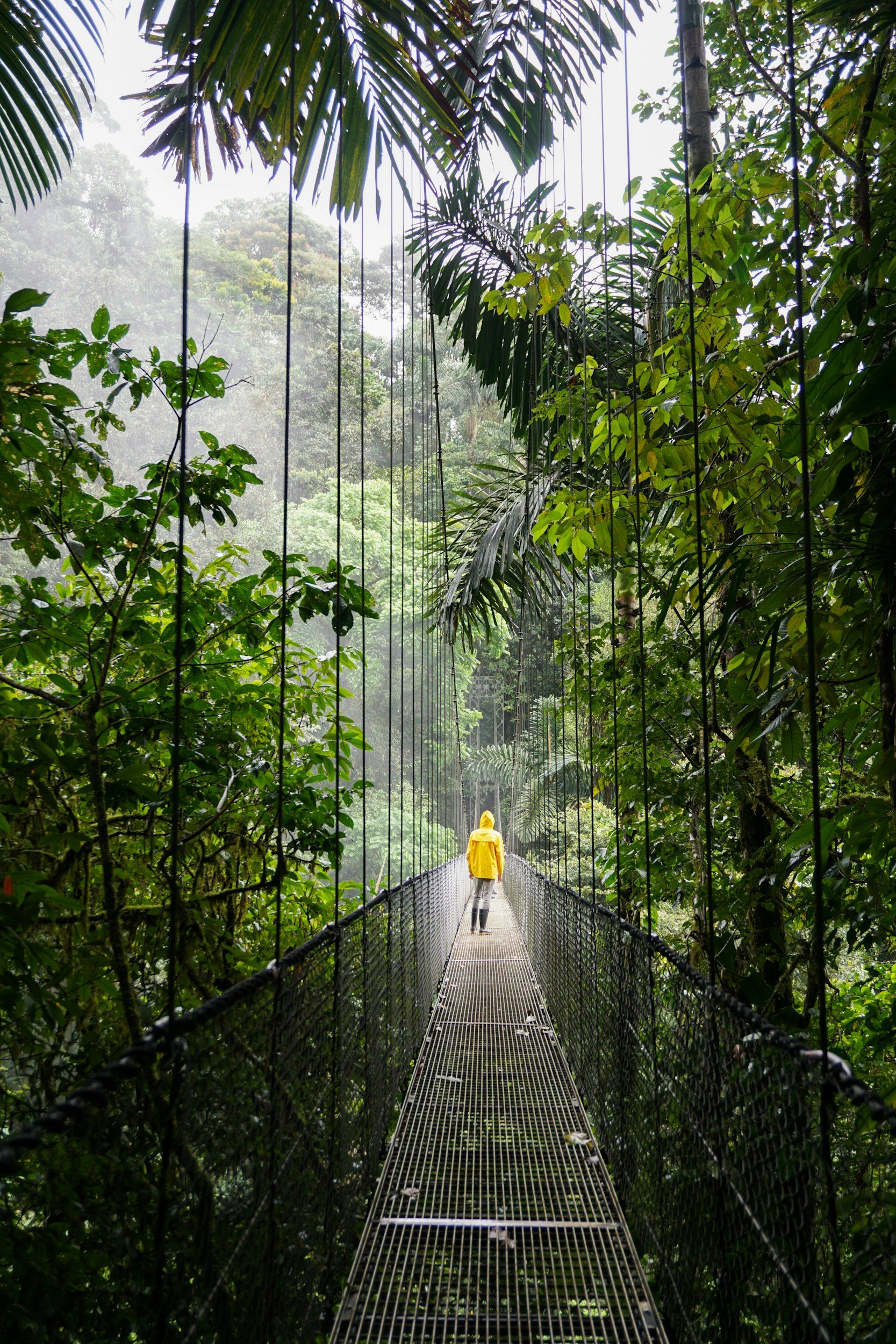
Start with Mistico Arenal Hanging Bridges in the morning when the wildlife is active and the heat hasn't arrived. The main loop runs a couple of miles with suspension bridges strung through the canopy, and school-age kids handle it fine. Hire a naturalist guide at the entrance. The difference between walking past a sloth and having someone set up a scope on it is the entire experience, and guides spot things you'd never catch.
Afternoon: hot springs. There's a wide range here, from the big resort complexes with water slides and swim-up everything to smaller thermal pools and the free river spot locals use. Resort day passes typically include a meal, which makes the math better than it first appears. Check current rates directly with whichever property you're considering, since packages change season to season.
Waterfall hike rewards older kids, exhausts younger ones
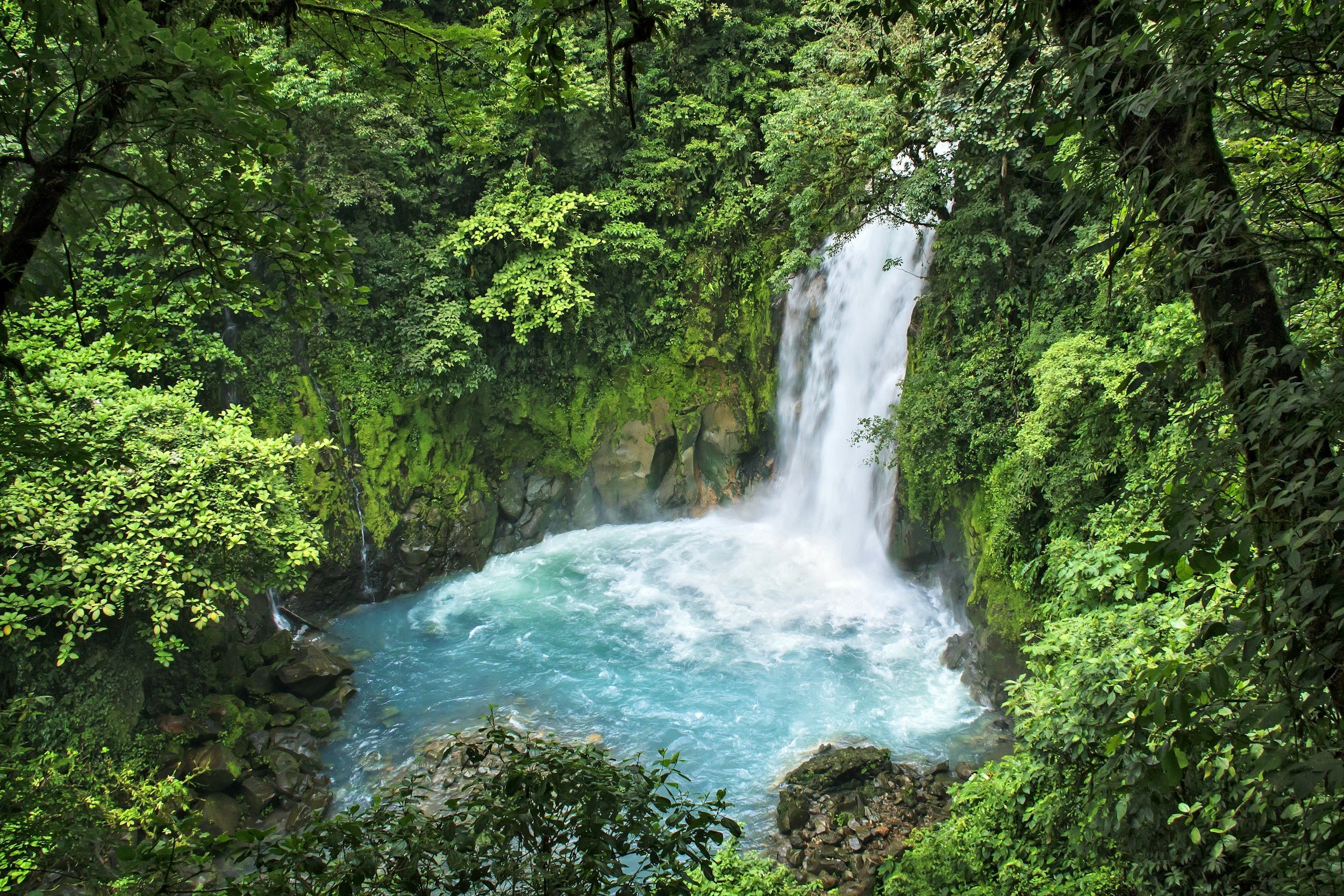
The waterfall is about 500 steps down into a canyon and 500 back up. That's the whole review. Kids 7 and up usually think it's an adventure; younger ones will need carrying on the return, so make your call with that in mind. The pool at the base is cold and swimmable, and the spray hits you from thirty feet away.
Spend the afternoon in La Fortuna town. The central park faces the church with the volcano behind it, there's good ice cream, and souvenir shopping is cheaper here than at any resort gift shop. This is also your laundry day if you're packing light.
River float works for mixed ages without adventure fatigue
By now you know your family's tolerance. Options, roughly in order of intensity: a safari float down the Peñas Blancas river (calm water, tons of birds and monkeys, works for almost any age), a visit to a wildlife rescue center, a volcano base hike across old lava fields, or canyoning for the tween-and-up crowd.
We'd pick the river float for a mixed-age family. It's two hours, it's shaded, and the wildlife density is absurd. For a deeper breakdown of which Arenal activities hold up with young kids and which ones don't, our guide to Arenal with young families ranks them by how much whining they generate.
Jeep-boat-jeep route beats driving around the lake
Drive to Monteverde on the morning of day 6. The fun option is the jeep-boat-jeep: a shuttle to Lake Arenal, a boat across, another shuttle up the mountain. It's faster than driving, the lake crossing breaks up the trip, and the kids will remember the boat. If you've got a rental car you'll want to drive it around the lake instead, which takes longer and ends on gravel.
Monteverde is cooler and wetter than everywhere else on this trip. Pack a fleece. Families who skip the layers spend two days shivering and blaming Costa Rica.
Day 6 afternoon: settle in, then do a guided night walk. Walking into a cloud forest after dark with a flashlight and finding sleeping birds, tarantulas, and kinkajous is the kind of thing school-age kids talk about for a year.
Day 7: the cloud forest reserve in the morning with a guide, then zip lining or a sky tram in the afternoon. Most Monteverde zip line operators set a minimum age around 4 to 6 for tandem rides and let kids ride solo somewhere around 8 to 10 depending on weight, so confirm with the operator before you book. If anyone in your family is nervous, the aerial tram gets you the canopy views with zero adrenaline required.
If you only have ten days instead of twelve, Monteverde is the stop to cut. Everything else on this route is harder to replace.
Manuel Antonio ends the trip on pure beach relaxation
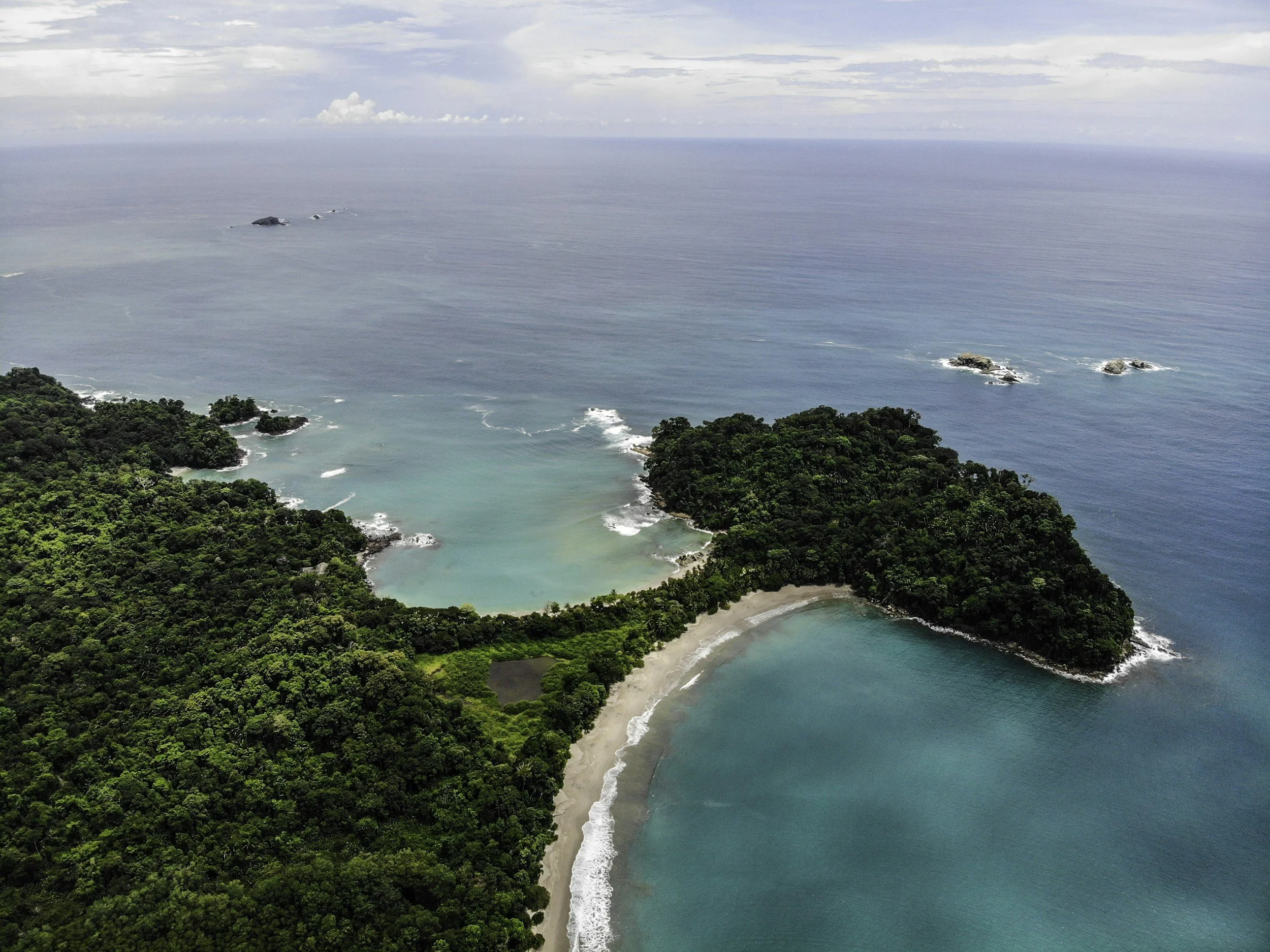
Drive down on day 8. It's the longest leg, so leave early, and plan to arrive in time for a late-afternoon beach swim. The Pacific coast is where this itinerary stops asking anything of your kids.
Arrive at opening for crowds, wildlife activity, and solitude
Go at opening. The park gets hot and crowded by mid-morning, the monkeys and sloths are most active early, and the beaches inside the park are worth having to yourself for an hour. Buy tickets online ahead of time because daily entry is capped, and the park closes one day a week (currently Tuesdays, but confirm before you go, since the schedule has shifted in past years).
Hire a guide at the gate. Same logic as the hanging bridges: kids who see a sloth through a spotting scope stay engaged, kids squinting at a distant gray lump do not. The main trail is wide, flat, and stroller-adjacent, and it ends at Playa Manuel Antonio where you can swim.
Watch your snacks. The white-faced capuchins are organized, fearless, and will unzip a backpack while you're looking at a bird.
Beach days let families set their own rhythm
Playa Espadilla is the big public beach with vendors, boogie board rentals, and surf lessons for beginners. Playa Biesanz is the calm one, tucked in a cove, better for younger swimmers and snorkeling. Do one in the morning and the other after a long lunch, or just do nothing at all. By day 10 your family needs a day with no start time.
If your kids want to try surfing, this coast is forgiving, and the same basic principles we lay out in our rundown on kids' first surf lessons apply here: small waves, soft-top boards, one hour max.
Choose mangroves, canopy bridges, or sunset sailing on day 11
Options: a mangrove kayak or boat tour through the Damas estuary (crocodiles, herons, monkeys in the mangroves), a half-day at Rainmaker Conservation Park with its canopy bridges and swimming holes, or a catamaran sunset sail. Between December and April the whale watching on this coast is excellent, and humpback season on the Pacific side roughly spans July through November and December through April depending on the population, so confirm current timing with a local tour operator.
Eat dinner at El Avion, the restaurant built around a cargo plane fuselage on the hillside. It's touristy and the kids will love it anyway.
Return to the airport the night before to avoid morning panic
Drive back toward the airport the day before your flight, not the morning of. A three-hour drive plus rental car return plus international check-in with kids is not a thing you want to attempt against a departure clock, especially if there's an accident on the coastal highway.
Stay near the airport again, return the car the evening before if the agency allows it, and have a relaxed last breakfast. If your flight is late in the day, you could stop in the Central Valley for a coffee plantation tour on the way up, which is more interesting for kids than it sounds (roasting, tasting, and usually a resident sloth or two).
Seven days works with two regions; ten to twelve needs all three
Not everyone has twelve days. Here's how the same route compresses or expands.
| Trip length | Regions | What to cut or add | Best for |
|---|---|---|---|
| 7 days | La Fortuna + Manuel Antonio | Skip Monteverde, 3 nights each, 1 airport night | First-timers, families with toddlers |
| 10 days | La Fortuna + Monteverde + coast | Trim one night from Arenal and one from the beach | Most families |
| 12 days | All three, unhurried | The plan above | School-age kids, spring break trips |
| 14 days | Add Guanacaste or the Caribbean | Tack on Tamarindo for surf or Puerto Viejo for a totally different culture | Repeat visitors, longer breaks |
We've mapped the shorter versions out in detail too, including an eight-day route that keeps the volcano-and-beach structure intact. And if you want the twelve days on paper in your hands at the airport, grab the free downloadable Costa Rica itinerary and adjust the dates.
Lodging and meals drive costs more than activities
Costa Rica is not a cheap Central American destination. It's priced closer to a U.S. national park vacation than to Mexico, and families who show up expecting bargain prices get sticker shock on day two. The good news: you control most of the spend through lodging and food choices, not through activities.
Your major line items:
Flights. Direct service into SJO runs from most major U.S. hubs. Shoulder months around the edges of dry season are often cheaper than peak dry season — compare live fares when booking.
Rental car. The base rate plus mandatory insurance. Get the real total quoted in writing before you arrive.
Lodging. The widest variable. Luxury resorts in Manuel Antonio and Papagayo sit at one end; family-run cabinas, Airbnbs with kitchens, and mid-range hotels with pools sit at the other. The gap between tiers is enormous, and the mid-range options near La Fortuna are truly lovely.
Activities. Guided tours, park entries, and hot springs passes. Two paid activities per region is plenty.
Food. Eating at sodas (small local restaurants serving casado plates) instead of tourist restaurants cuts your food budget roughly in half.
The budget move nobody talks about: book lodging with a kitchen for at least part of the trip. Breakfast at the condo and a grocery run for snacks and fruit saves more money than any activity you'd skip, and kids eat better. You can filter for family rooms and kitchens across all three regions in one search rather than piecing it together.
Each age group experiences this itinerary completely differently
"Kids" covers a huge range, and this trip plays very differently at 4 than at 14.
Toddlers need two regions, shallow pools, and a private driver
Cut to two regions. Skip Monteverde entirely and skip the La Fortuna Waterfall stairs. Lean into hot springs with shallow pools, the river float, short wildlife walks, and beach time. Bring a carrier instead of a stroller for anything that isn't paved. Private drivers are worth the money at this age because you can nap in the car without anyone navigating.
School-age kids are the perfect fit for this full route
This is the itinerary above, and this is the age Costa Rica is best for. Kids this age can hike a few miles, handle a zip line, snorkel, and stay curious throughout a guided walk. Give them a job: one kid tracks the wildlife list, another handles the camera. Our free travel learning worksheet turns the trip into something they can bring back to class.
Teens thrive with canyoning, rappelling, and longer drives
Add intensity. Canyoning and rappelling down waterfalls in La Fortuna, the longer and faster Monteverde zip lines, surf lessons on the coast, maybe a white water rafting trip on the Pacuare. Teens also handle the long drive days better, which means you can add a fourth region.
Tap water is safe; sun and tropical insects require real prep
Costa Rica is one of the easier international destinations to take kids to. Tap water is drinkable in most of the country including San José, La Fortuna, and Monteverde, though bottled is the safer bet in remote coastal areas. Private hospitals in San José are excellent, and clinics in the tourist towns handle the usual scrapes and stomach bugs.
The things worth preparing for:
Sun. You're 10 degrees from the equator. Reef-safe sunscreen, rash guards, hats, and reapplying constantly.
Mosquitoes. Dengue exists. Repellent at dawn and dusk, long sleeves in the evening.
Riptides. The Pacific beaches have strong currents and most have no lifeguards. Swim where other families are swimming and keep young kids in the shallows.
Travel insurance. Get a policy that covers medical evacuation. It's cheap relative to the trip and it's the one thing you'll be glad you bought if something goes sideways.
Petty theft. Don't leave anything visible in a parked rental car, especially at trailheads and beach lots. That's the main property crime risk tourists hit.
No special vaccinations are required for travel from the U.S. or Canada, but check your family's routine shots are current and talk to your pediatrician if you're adding a remote region. Check the CDC or WHO travel health site for current vaccination recommendations for Costa Rica before you go. We go deeper on the realistic risk picture in our piece on what parents should really plan for in Costa Rica.
Quick-dry clothes and closed-toe shoes cover three climates
Three climates, twelve days, one bag per person if you're disciplined. The non-negotiables: quick-dry everything (cotton never dries in the rainforest), closed-toe hiking shoes plus sandals, a light rain jacket, one warm layer for Monteverde, and a dry bag for boat days.
Things families consistently forget: a headlamp for night walks, binoculars (one pair per kid if you can swing it, because sharing one pair causes more conflict than it solves), motion sickness remedies for the mountain roads, and a small first aid kit. Our complete Costa Rica packing list for families breaks it out by category, including what's cheaper to buy once you land.
Frequently asked questions about timing and logistics
How many days do you need for a Costa Rica itinerary for families?
A well-planned Costa Rica family itinerary usually runs ten to twelve days for a first trip. Seven days works if you stick to two regions and accept that two of those days are mostly travel. Under seven, pick one region and stay there: a week split between the airport, a volcano, and a beach leaves you with about three real vacation days.
Is it better to visit La Fortuna or Manuel Antonio first?
La Fortuna first. It's closer to the San José airport, which means a shorter drive while everyone is still jet-lagged, and it front-loads the adventure days when kids have the most energy. Ending on the beach gives you a natural wind-down before the flight home.
When is the best time to take kids to Costa Rica?
The dry season runs roughly December through April and lines up with winter break, spring break, and Easter. February tends to be dry and popular, so book early. Green season (May through November) brings afternoon rain, often better deals on lodging (compare current rates before you book), and greener everything, which is a reasonable trade if your family doesn't mind getting wet.
Do we need to speak Spanish?
No. English is widely spoken across the tourist corridor, and guides, hotel staff, and tour operators all work in English. That said, teaching your kids ten phrases before the trip changes how people interact with them, and it's a small, satisfying thing for a school-age kid to pull off.
Can you do this trip without renting a car?
Yes. Shared shuttles connect San José, La Fortuna, Monteverde, and Manuel Antonio on daily schedules, and every region has taxis and local tour pickups. You'll trade spontaneity for not having to drive. Families with toddlers or anyone uneasy on mountain roads should take that trade without guilt.
Book the car and park tickets first, everything else flexible
Pick your dates first, then book the rental car and the Manuel Antonio park tickets, because those two sell out before anything else does. Everything else on this Costa Rica family itinerary can be arranged a few weeks out, and truthfully, leaving a couple of afternoons unbooked is how you end up finding the waterfall nobody told you about. Start a rough day-by-day in whatever format you like, block out the four La Fortuna nights, and see how the rest falls into place.
Happy Adventuring!
Jen