Camino de Santiago with Kids in Winter (French Way)
Affiliate Links may be used on this website, at no additional cost to you. This means I may earn a commission if you make a qualifying purchase. There is no charge to you. Thanks for supporting this website!
If you’ve ever searched “Camino de Santiago with kids”, “best Camino route for beginners”, or “Can you walk the Camino in winter?”…. I’ve been right there with you.
Before we walked it, the Camino felt almost mythical to me. A 1,000-year-old pilgrimage route stretching across Spain. Medieval villages. Pilgrims carrying scallop shells. Long reflective days of walking.
The Camino de Santiago (also called the Way of St. James) is a network of pilgrimage routes that all lead to Santiago de Compostela, where the remains of Saint James, one of the twelve disciples of Jesus, are believed to be buried. People have been walking these routes since the 9th century. Originally religious, today pilgrims walk for all kinds of reasons — faith, personal growth, adventure travel, slow travel in Spain, digital detox, or simply because it’s on their bucket list. All good reasons, and no matter whatever inspires your journey, it is 100% worth it.
Even if it’s in the winter….
I never thought that’s how it would work out, but we happened to find ourselves agreeing to a home exchange in Spain from January to March and I just couldn’t be in Spain for that much time and NOT walk the Camino. This walk was on my bucket list and something about walking a path from the 9th century just spoke to me. So, even the even though winter isn’t considered the best time to walk the Camino de Santiago, we went for it.
The weather forecast wasn’t exactly inspiring….
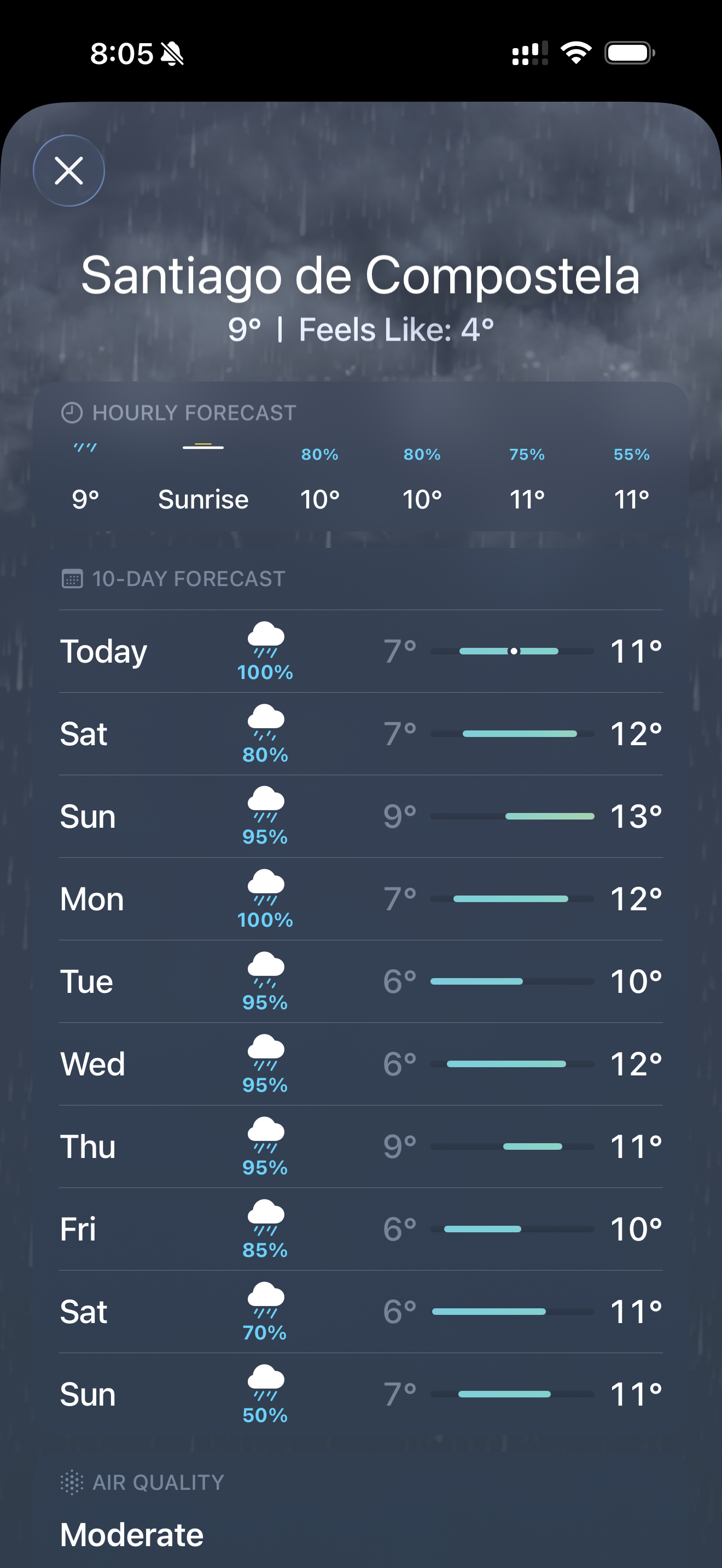
It rained. A lot.
There were days we questioned our sanity.
And yet, I would do it again in a heartbeat.
Understanding the Different Camino Routes
When people say “the Camino,” they’re usually referring to the Camino Francés (French Way), which is the most popular route. It starts in Saint-Jean-Pied-de-Port in France and crosses northern Spain.
But there are several Camino routes:
The Camino Portugués, starting in Lisbon or Porto.
The Camino del Norte, along Spain’s dramatic northern coastline.
The Camino Primitivo, the original and more mountainous route.
The Camino Inglés, a shorter Galician option.
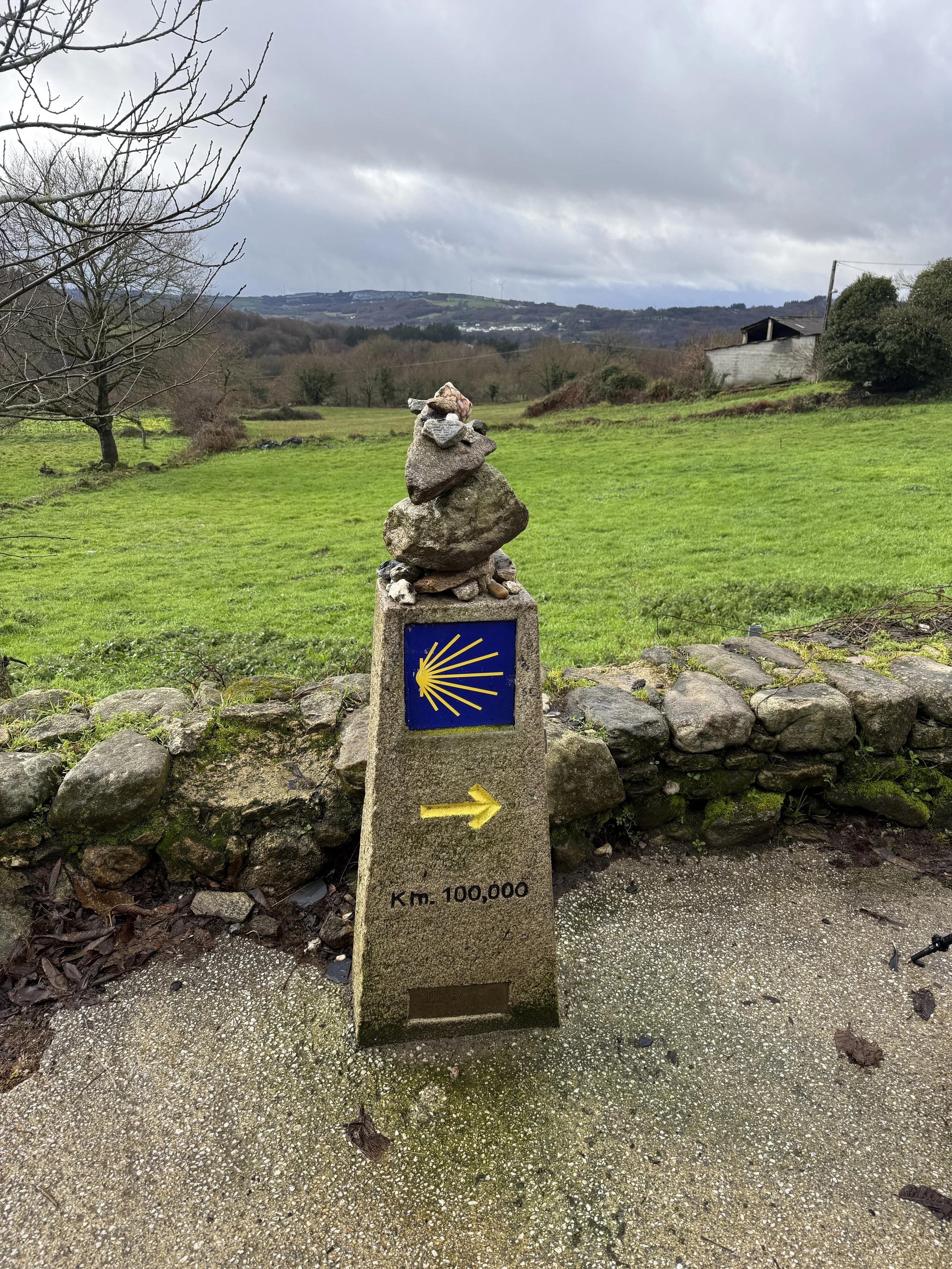
If you’re researching the easiest Camino route or the best Camino for beginners, most people recommend the final 100 km of the Camino Francés, starting in Sarria. That’s the minimum distance required to earn your official Compostela certificate.
That’s what we chose.
When Is the Best Time to Walk the Camino?
Peak Camino season runs from May through September. During summer, the trail is busy, cafés are open, albergues are full, and there’s a lively social atmosphere.
In winter (November through March), it’s completely different.
Fewer pilgrims.
More rain (especially in Galicia).
Many accommodations and restaurants closed (but still 100% possible to find great places to stay)
Much quieter energy.
On the day we arrived in Santiago, only 76 pilgrims received their certificates.
And honestly? We loved that.
Why We Started in Sarria
Starting in Sarria is incredibly common because it allows you to walk the required 100 km for the Compostela. It’s manageable, especially for families, and the infrastructure is excellent.
We intentionally planned shorter stages to “get our walking legs.” In my experience, this was absolutely the right call, especially walking the Camino with kids. Before this, our longest family hike was 15km.
We stayed at DP Cristal in Sarria. It made logistics easy:
Underground parking for eight nights (€40).
Apartment-style space.
Breakfast included.
They organized our pilgrim credentials.
You can also organize luggage transfer through them, but we had already booked another service.
Filling out those little passports the first night felt surprisingly emotional. It made the journey feel official, and at that point I had no idea how it was going to go.
For luggage transfer we used Paq Mochila, operated through Correos. The cost was 45 Euros for a bag of 15kg or less. They were super helpful and reliable, and I would recommend the service. You leave your suitcase at the pick up location of your accommodation (usually the front lobby or a designated luggage storage room) and they deliver it to your next accommodation by 14:30 the same day. This is amazing for traveling with kids!
Our 8-Day Camino de Santiago Itinerary (Winter)
We kept our daily distances between 7 km and 20 km. That meant 3–5 hours of walking per day and relaxed mornings and afternoons. That pace made all the difference. We wanted to have relaxed mornings, walking by 9-10am and arriving early afternoon between 1-4pm. It meant we could take breaks every 1.5-2hrs without any rush, and take our time warming up and relaxing over lunch when we found an open café or restaurant.
Day 1: Sarria to Peruscallo (7 km)
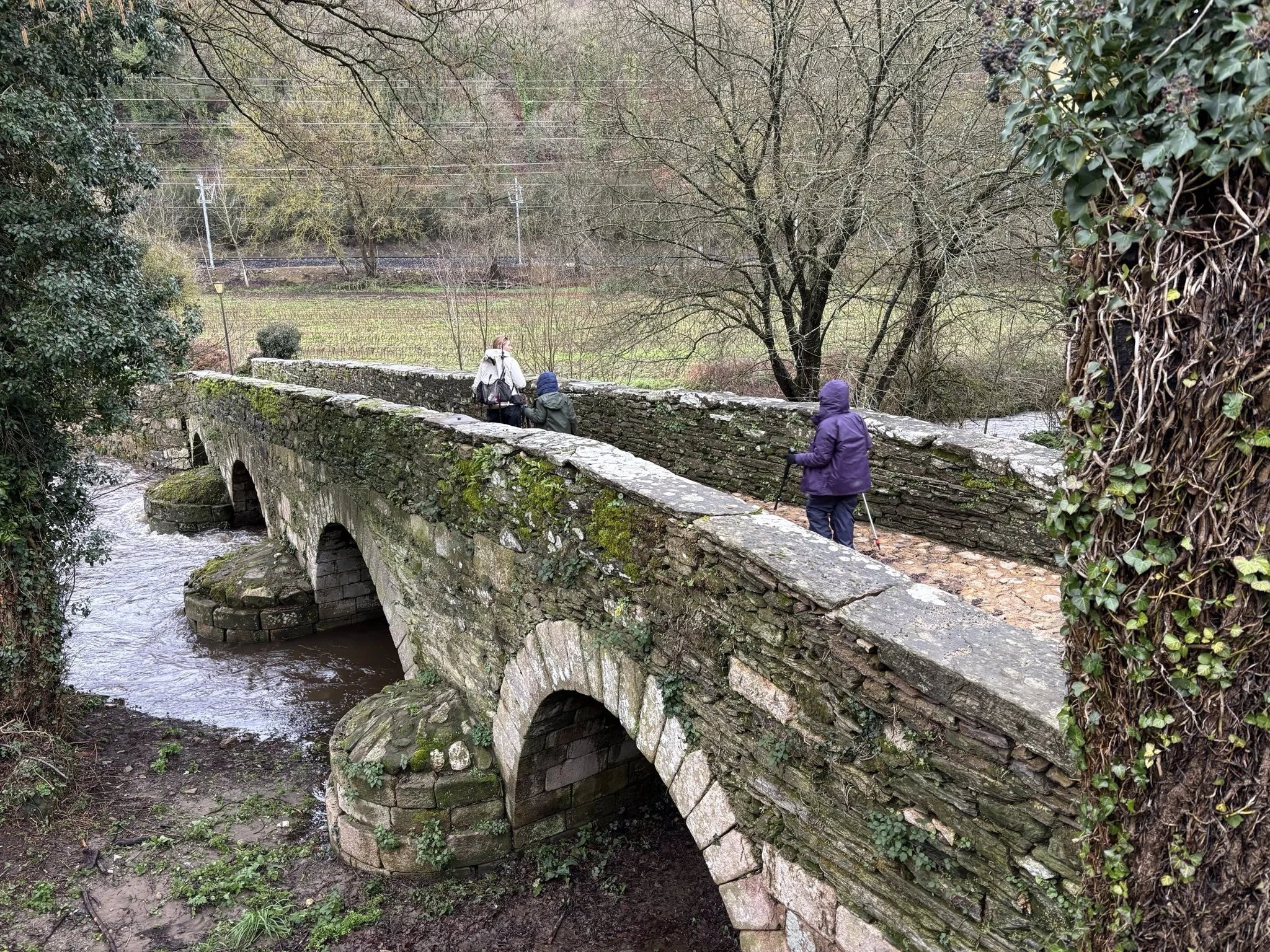
We started short on purpose. Although to be fair, A 7km walk with kids is not short. It sounds “short” relatively speaking to the established or suggested stages of the camino, but for North American kids (and adults) who live a largely car lifestyle, 7km is a decent distance to travel by foot on day 1.
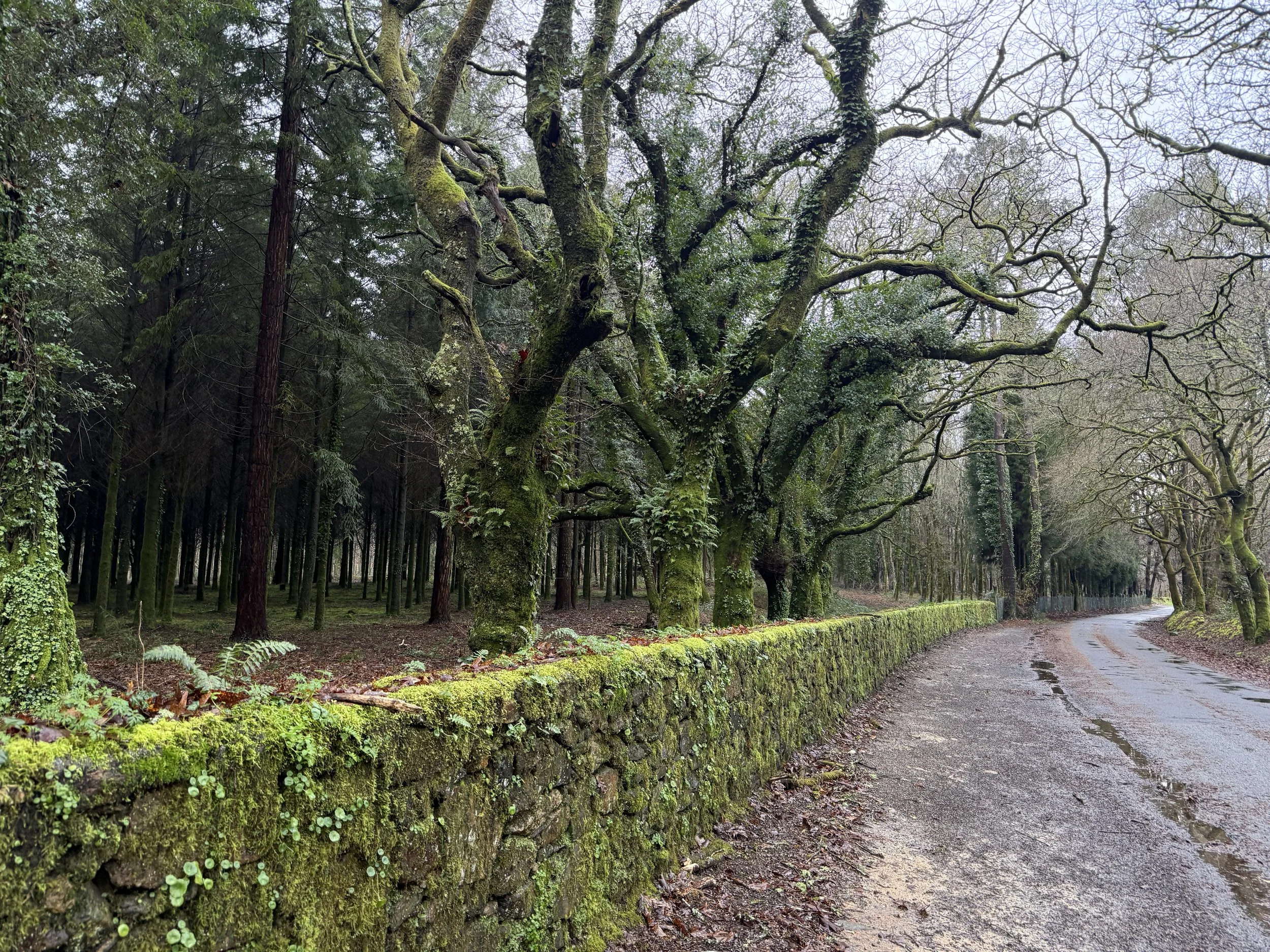
The trail rolled through forests and small villages, and everyone was excited. Seven kilometers felt like a success without exhausting anyone.
We stayed at Casa da Torre, a tiny pilgrim stop with a wood-burning furnace. It was cold but cozy. The host brought us dinner — the best paella of the trip.
Important winter tip: nothing was open along the route. Carry snacks. In Peruscallo there is a little pilgrim shelter with benches, a vending machine, and a coffee machine. All the things a pilgrim needs!
Day 2: Peruscallo to Portomarín (13 km)
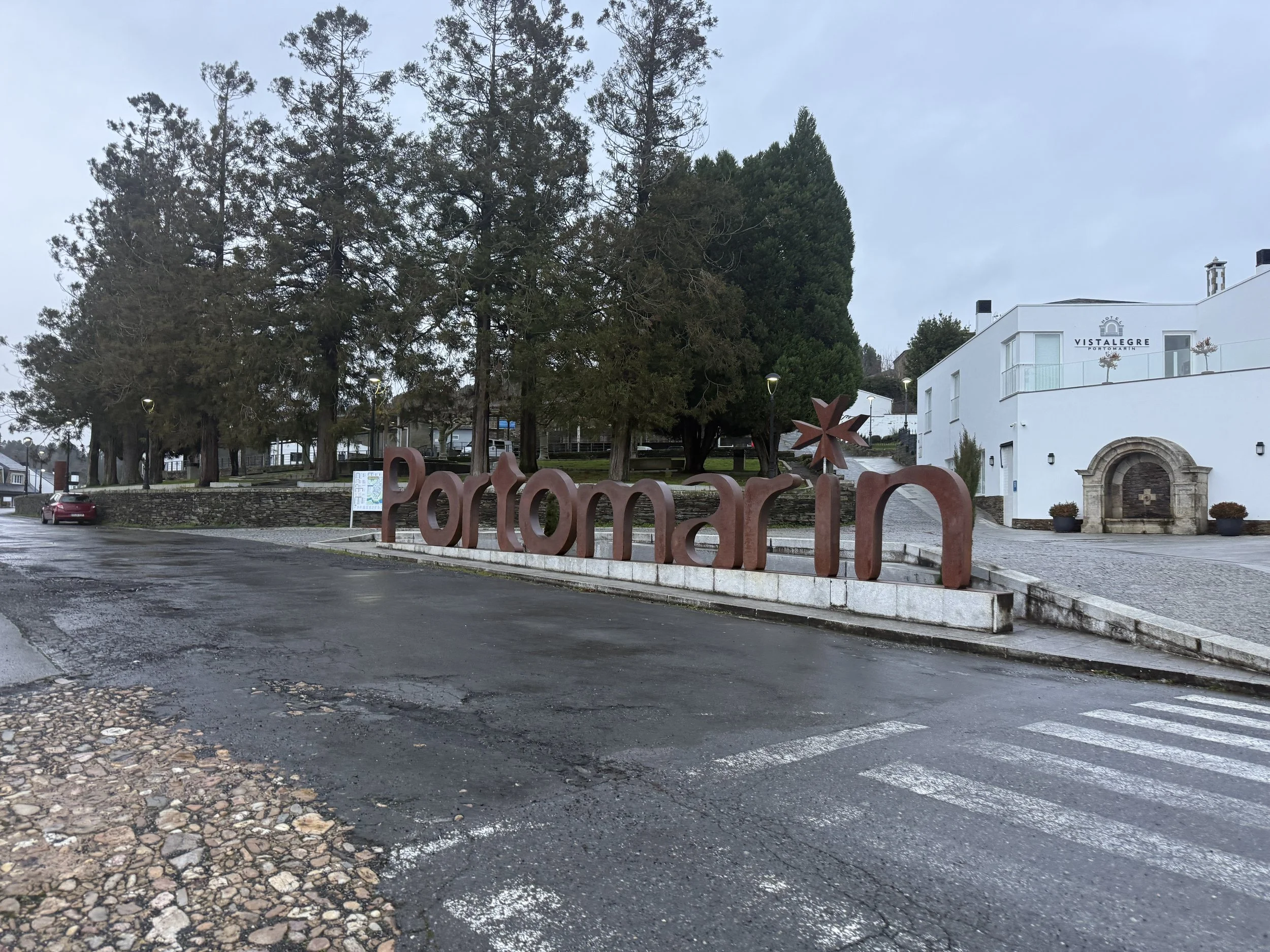
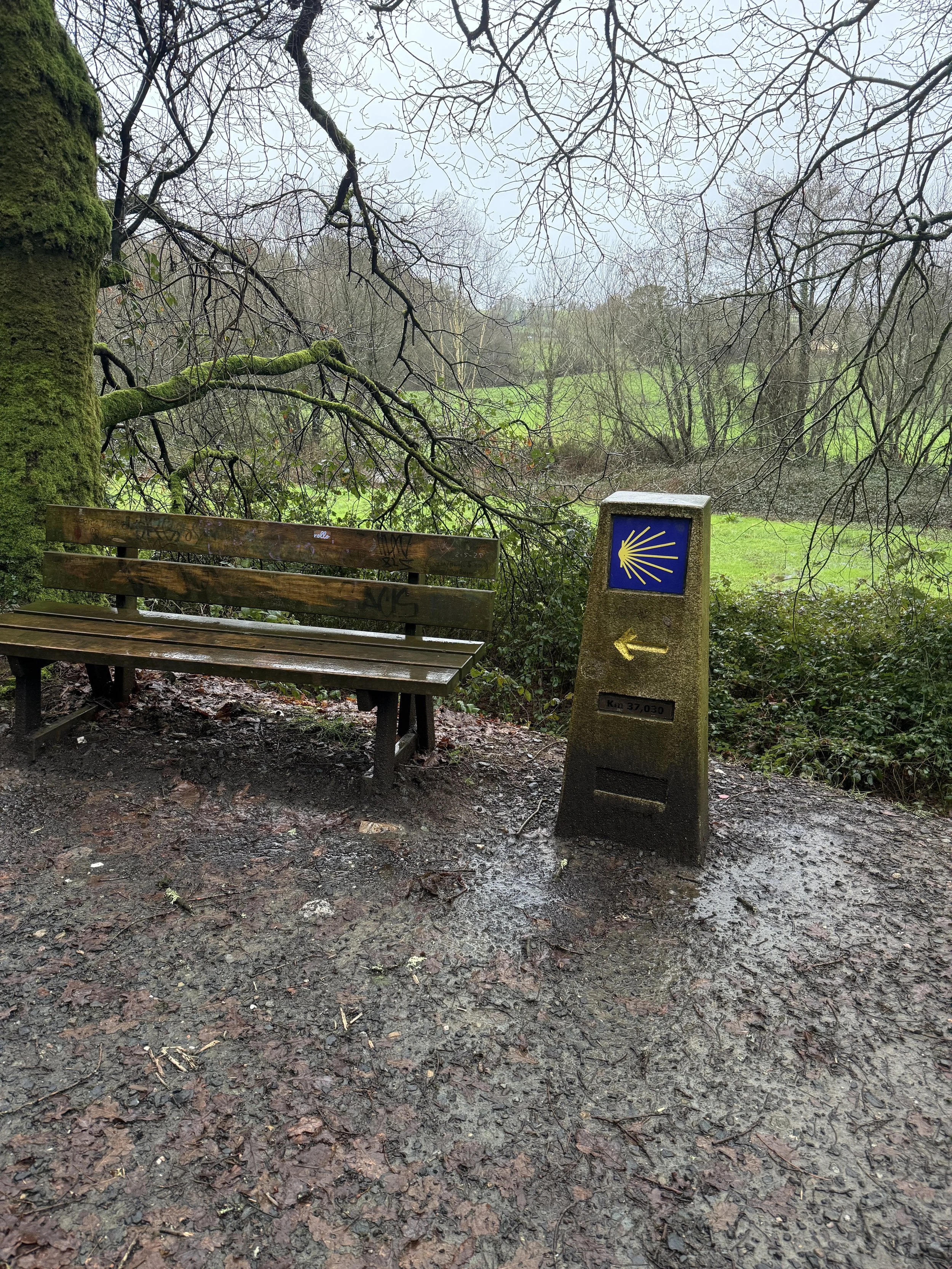
This was our first longer stretch.
There were washed-out sections from rain, muddy patches, and dramatic grey skies. Around the 8–10 km mark, we found a café open. Hot coffee and Cola Cao for the kids felt like a victory.
We stayed at PortoSantiago Boutique & Rooms in Portomarín.
Portomarín is striking, especially its fortress-like church perched above town. In winter, it feels almost empty.
Day 3: Portomarín to Ligonde (18 km)
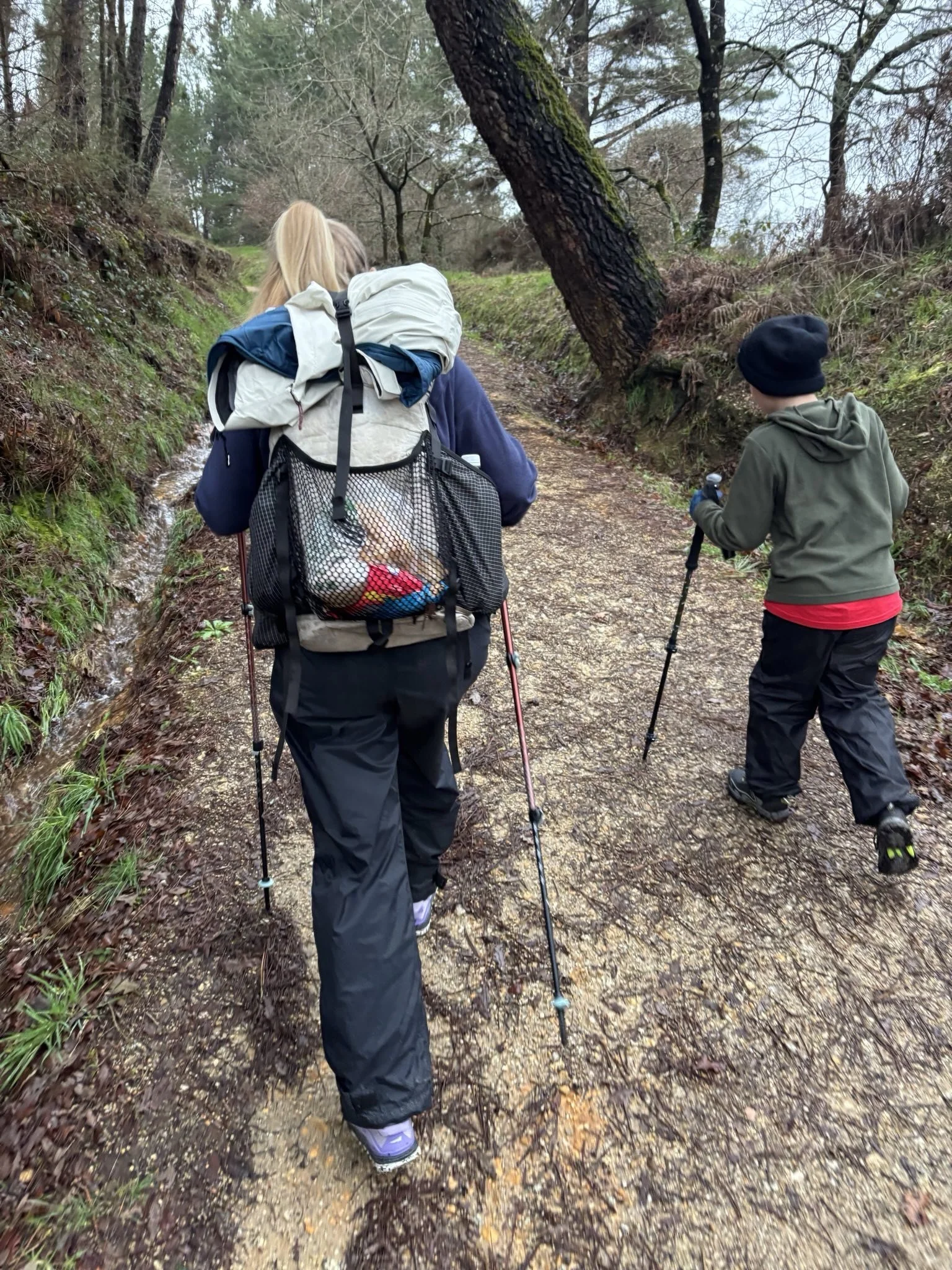
This was one of my favorite walking days. Perhaps because we got to take off a few layers and we saw more sunshine!
Rolling farmland. Stone walls. Quiet forests. The kids did come up with the nickname “Camino de Stinky-ago” today because there were some overwhelming farm smells at a few points! It was a bit of comedy is our day, and it may have been one of our favorite because we had less rain. There is a lot of uphill walking to start the day :)
We stayed at Casa da Cota in Ligonde. Well, it is actually a bit farther along the trail than Ligonde in Monterosso. It was warm, spotless, and peaceful. Nothing else in town was open, but the host offered to pick up groceries so we could cook dinner.
Winter Camino kindness is something special.
Day 4: Ligonde to Palas de Rei (7 km)
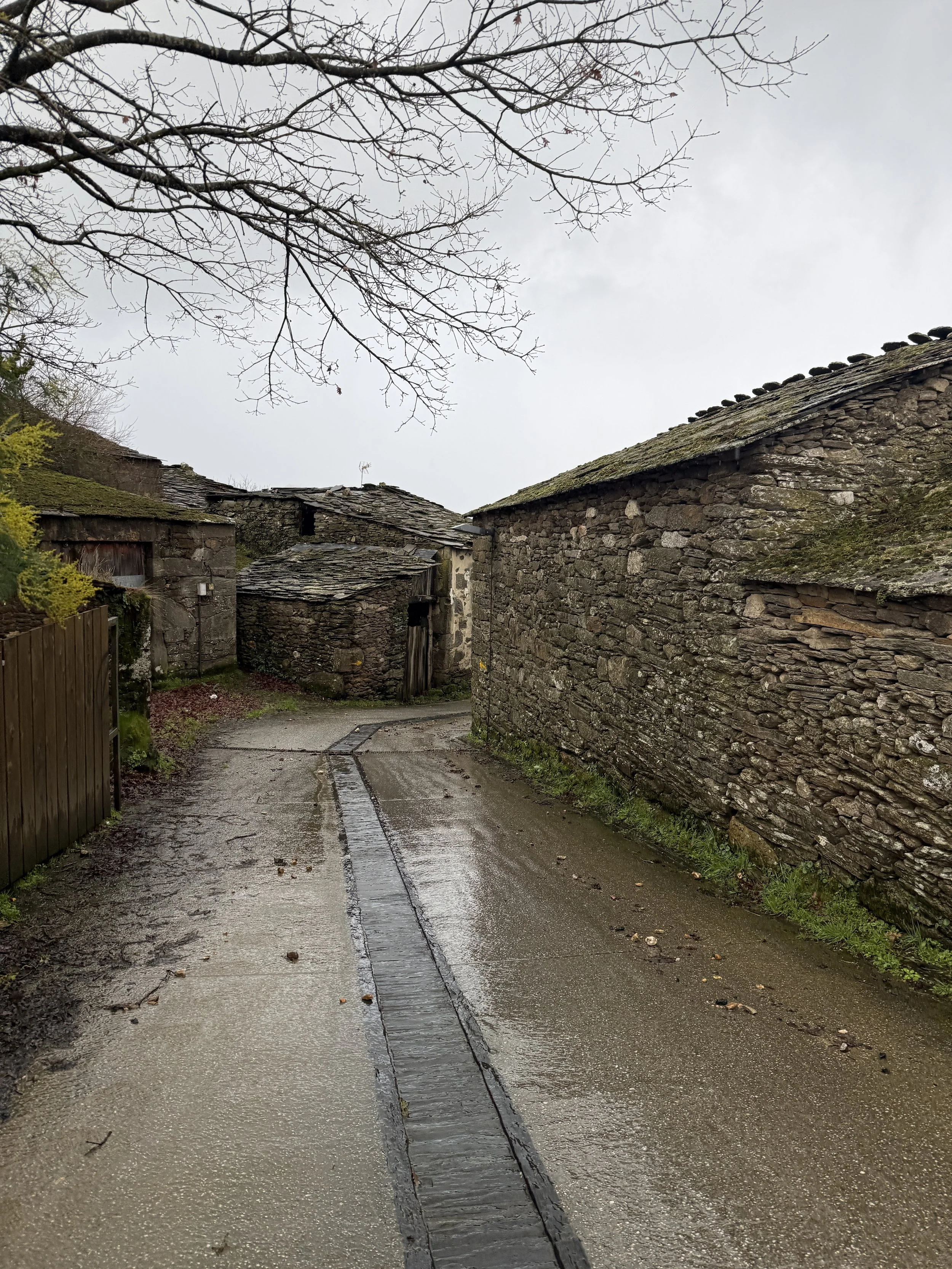
Torrential rain.
Not the light misty kind that feels romantic. The soaking, relentless kind that seeps into your gloves and makes puddles unavoidable.
This was tough on morale. Even though it was only about 7 km from Ligonde to Palas de Rei, every step felt heavier. Ponchos flapped, rain dripped off the brims of our hoods, and conversations got shorter as everyone focused on just putting one foot in front of the other.
I was extremely grateful we had intentionally planned this as a short walking day. Two hours in that kind of weather was manageable. Four or five would have been a very different story.
This was the day our rain gear truly mattered. Rain pants, proper waterproof layers, dry gloves — they weren’t optional. And having a full change of dry socks waiting in our luggage that afternoon felt like winning the lottery.
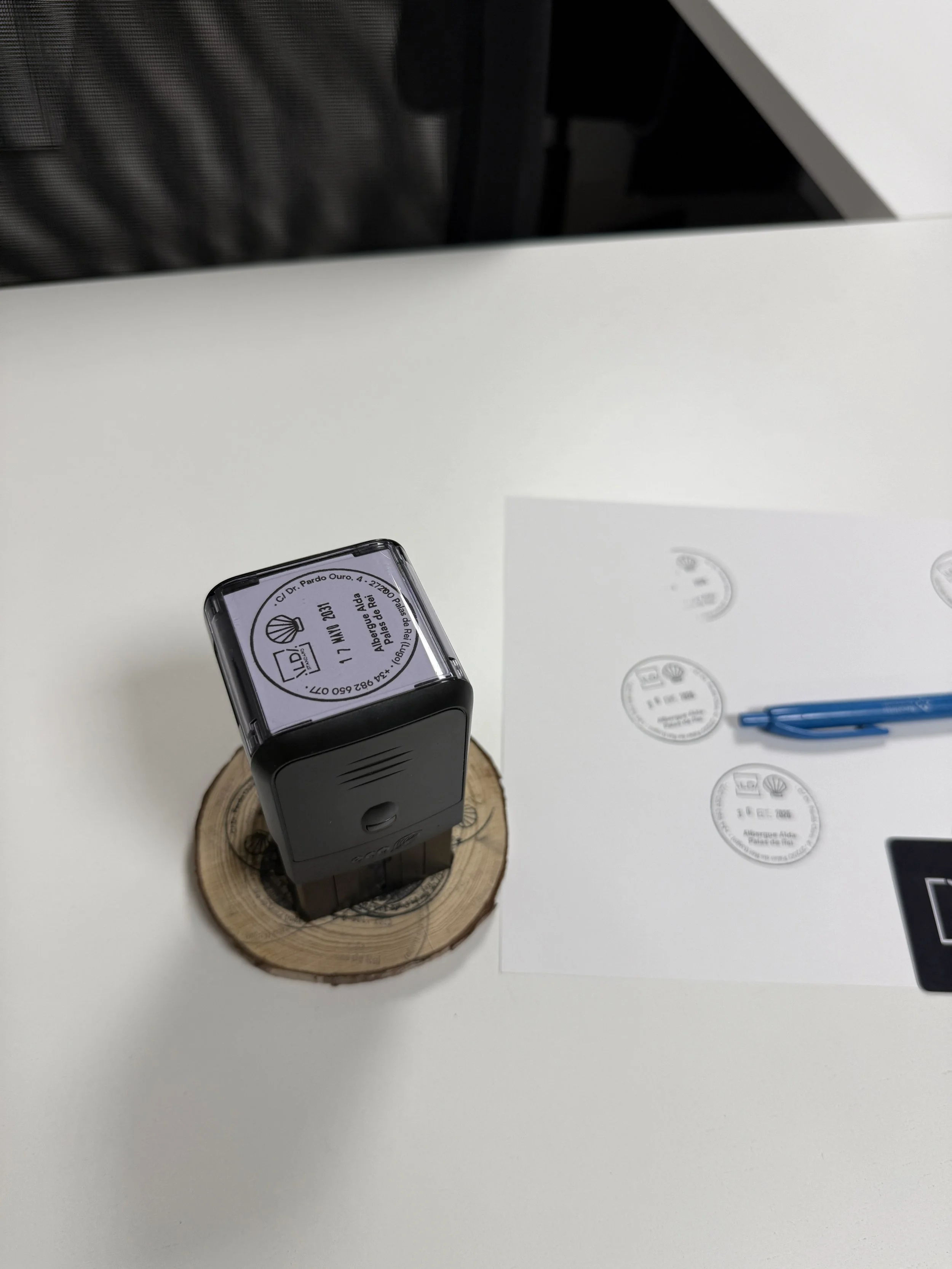
We stayed at Alda Palas de Rei. It was clean, warm, and comfortable — which was exactly what we needed after walking through sheets of rain. Winter services were limited, though. No breakfast setup, no café buzz, no extras. Just a quiet building and a hot shower. Sometimes that’s enough, but if I were to do it again I would book something in town as this place is about 500m away from anything (remember you have been walking all day so more walking, especially in the rain is not super popular!).
The highlight of the day had nothing to do with the trail.
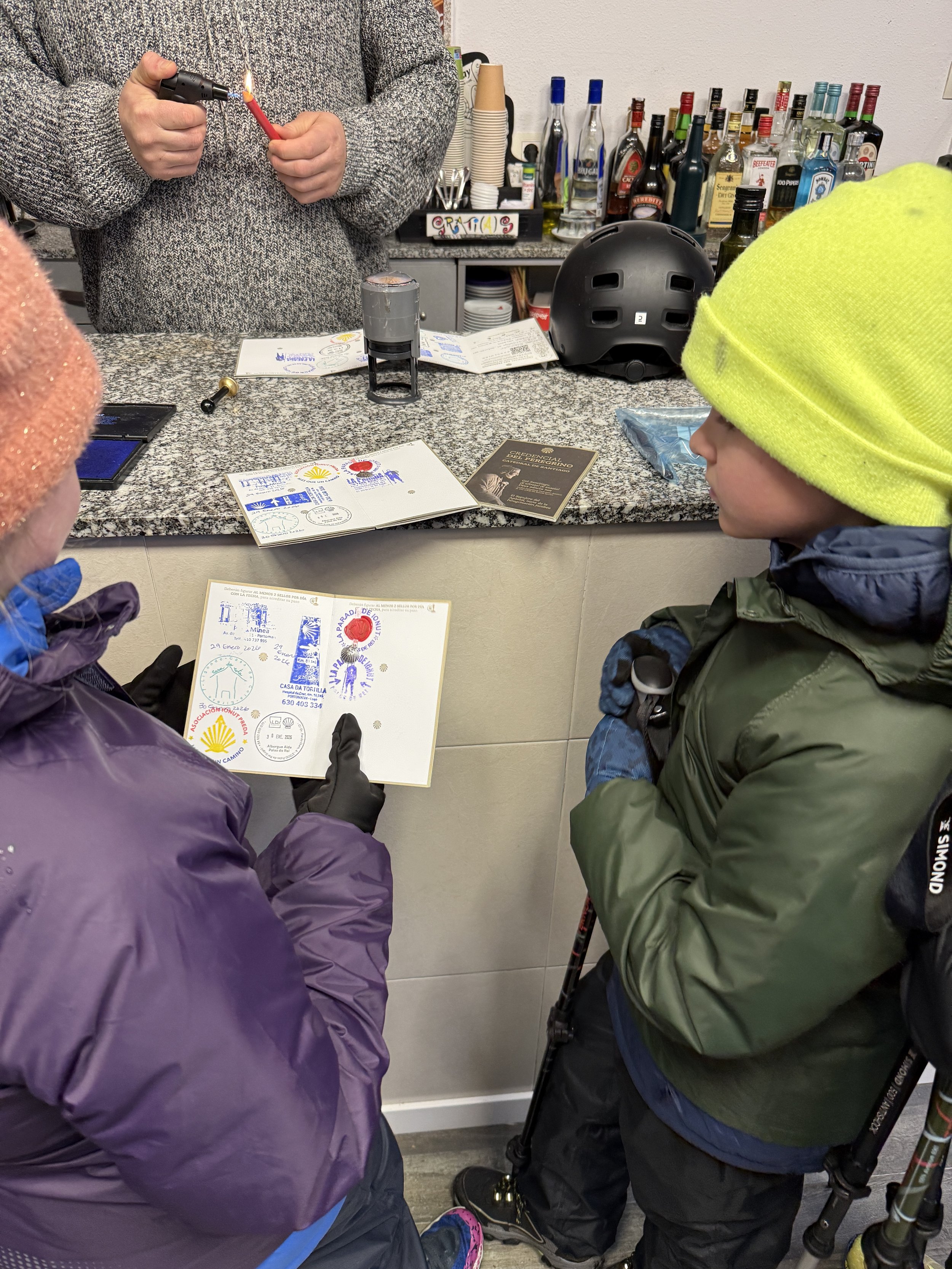
My husband went out in the rain to grab pizza for dinner and struck up a conversation with the owner. The next morning, we ran into him again — and he made us the most beautiful passport stamps, scallop shell bracelets for the kids, and words of encouragement for the final stretch to Santiago.
That moment shifted the whole day and left a positive impression of Palas de Rei that we didn’t get from the isolated and impersonal feeling at the hotel.
The Camino isn’t just about kilometers walked. It’s about unexpected kindness. Small human connections that feel outsized in memory.
Even in the pouring rain, maybe especially in the pouring rain, those moments are what make it unforgettable.
Day 5: Palas de Rei to Melide
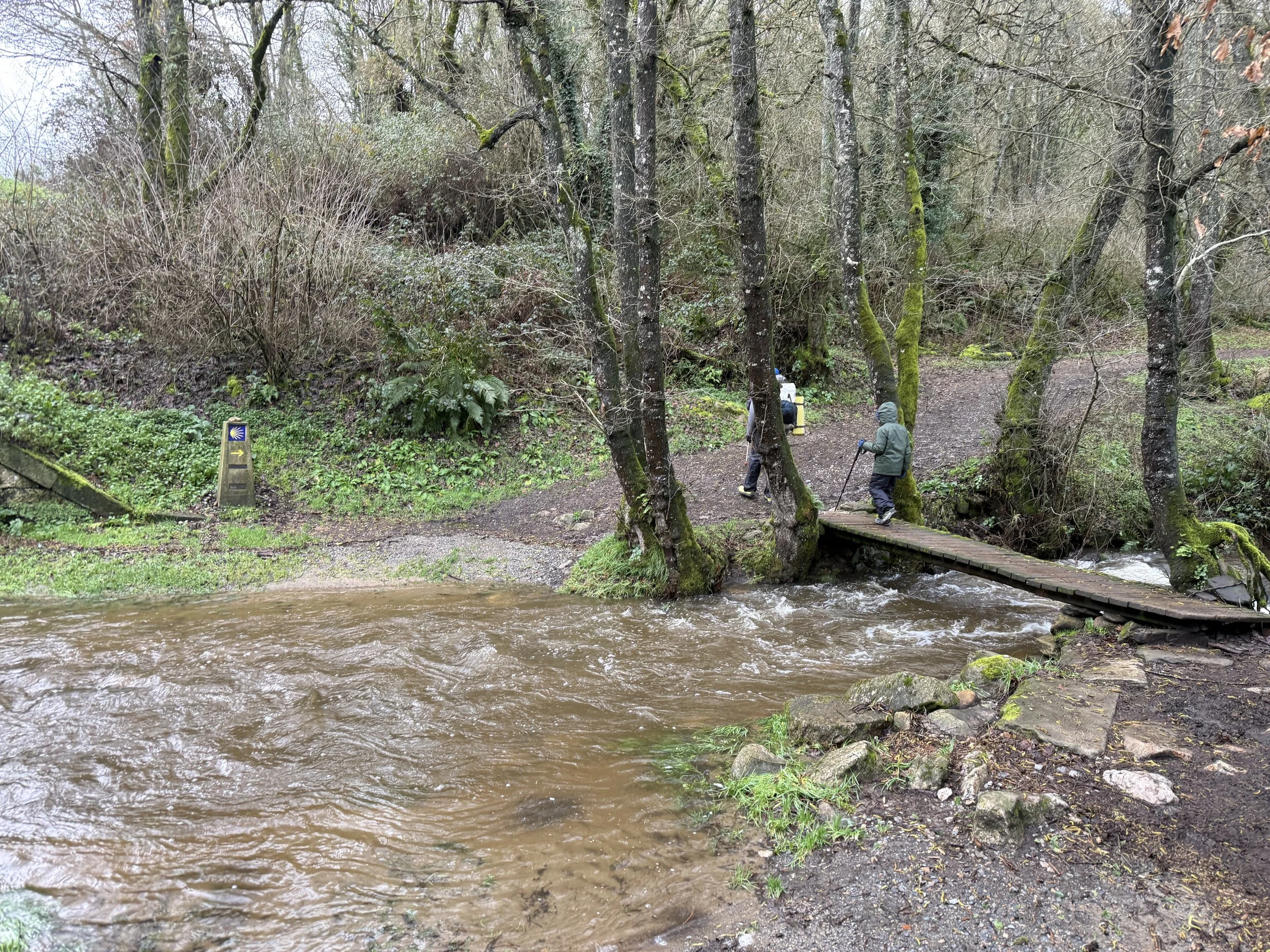
By day five, we finally felt like we had our walking legs. The stage from Palas de Rei to Melide is about 14–15 km and felt very manageable at this point. The trail rolled through wooded paths, small farm roads, and quiet Galician villages. Nothing overly dramatic — just steady, peaceful walking.
We stopped mid-morning for coffee and pastries (we almost always found one open café around the 8–10 km mark, even in winter), and then pushed on into Melide.
Melide is one of the larger towns along the final 100 km of the Camino Francés, so it felt slightly busier than our previous stops. It’s especially known for pulpo a la gallega (Galician-style octopus), and in peak season people line up for it. Even in winter, a few pulperías were open — but after a long day of walking, comfort food won. Warm, simple, kid-approved meals just felt right.
We stayed at Hotel Carlos 96, which was clean, comfortable, and very convenient. Having a restaurant in the building made winter logistics easy — no wandering around in the cold looking for something open. At this stage of the Camino, a hot shower, a hearty meal, and dry socks are really all you need.
Melide felt like a milestone. We were getting closer to Santiago, and you could feel the momentum building.
Day 6: Melide to Arzúa (15 km)
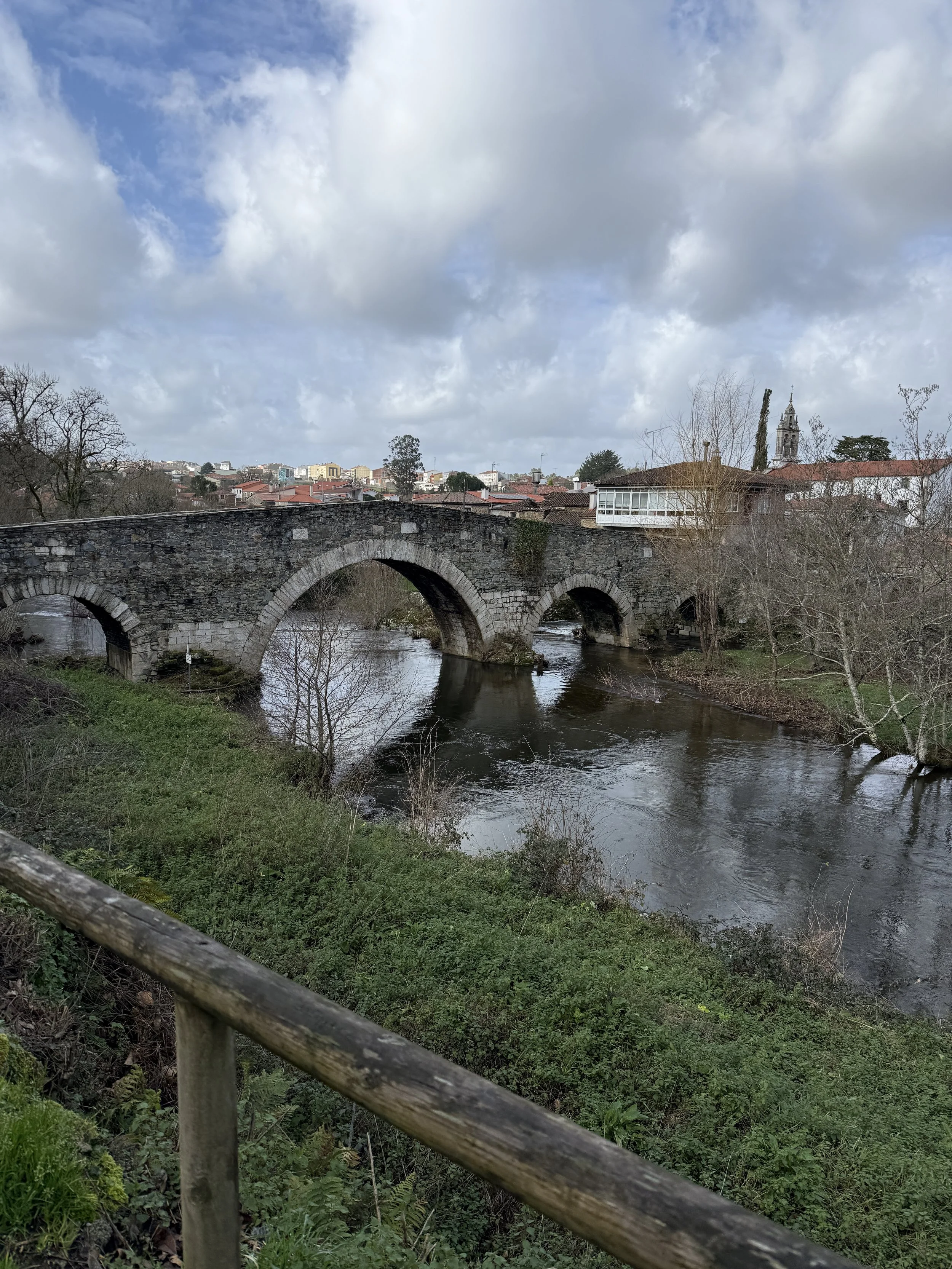
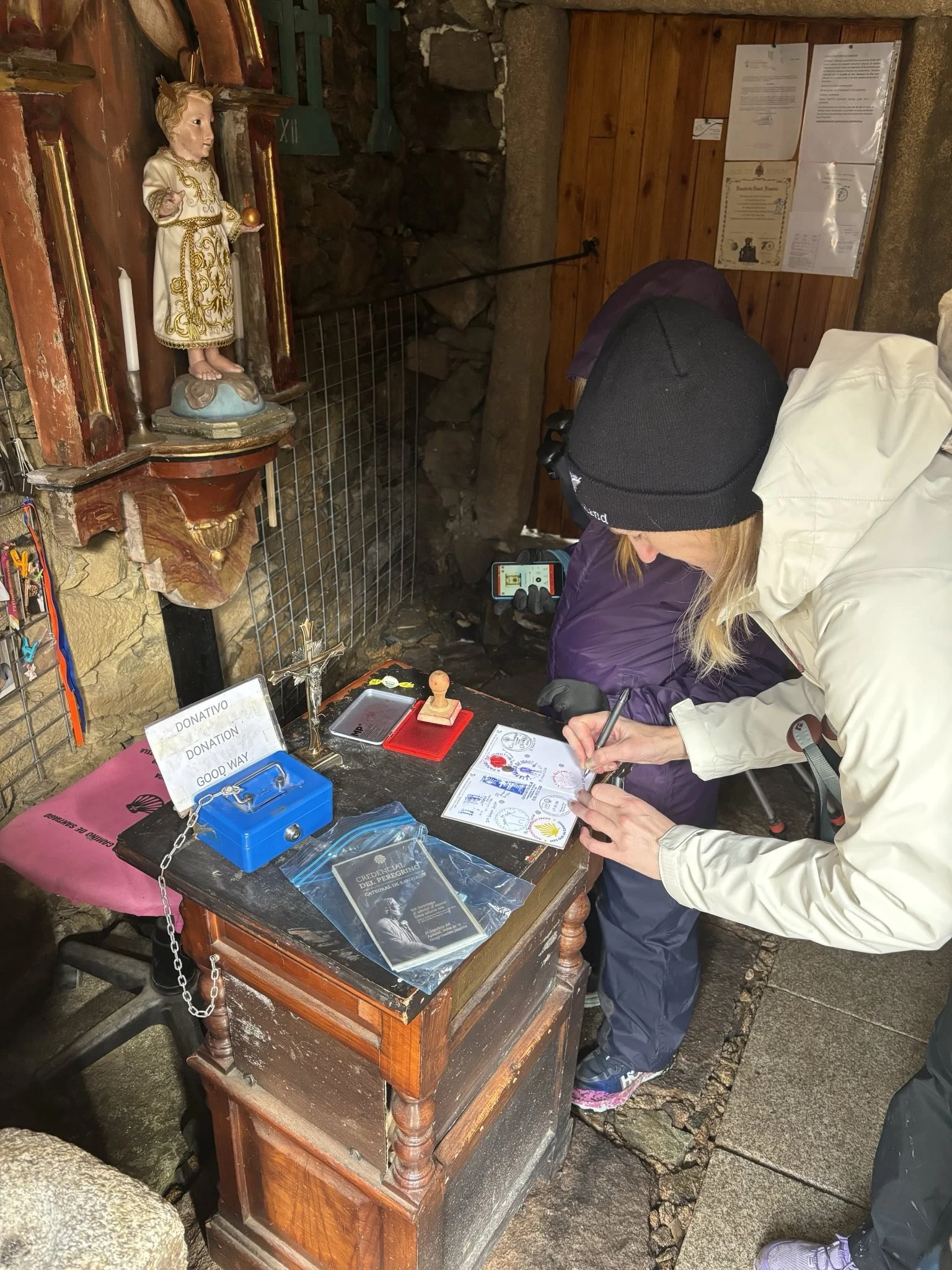
We stayed in an attic apartment above a grocery store called Buen Camino Arzúa, which felt like absolute luxury at this point in the Camino.
A kitchen.
Laundry.
Groceries downstairs.
Except… we arrived on a Sunday. And in Spain, that matters.
The grocery store below us was closed, which made us laugh a little at the irony. But about 50 meters away there was a small 24-hour shop, so we popped in and grabbed what we needed.
I had packed pasta and marinara sauce in our luggage from the beginning of the walk. It’s simple, satisfying, and doesn’t require refrigeration, which makes it perfect Camino food. After a long day on the trail, there is something deeply comforting about a big bowl of pasta in a warm apartment.
Having a washing machine was definitely handy, but we were selective about what to wash since there are no dryers, and things don’t dry quickly in the winter.
By this stage of the Camino, comfort doesn’t mean fancy. It means warm, dry, and functional. And that little attic apartment delivered exactly that.
Day 7: Arzúa to O Pedrouzo (20 km)
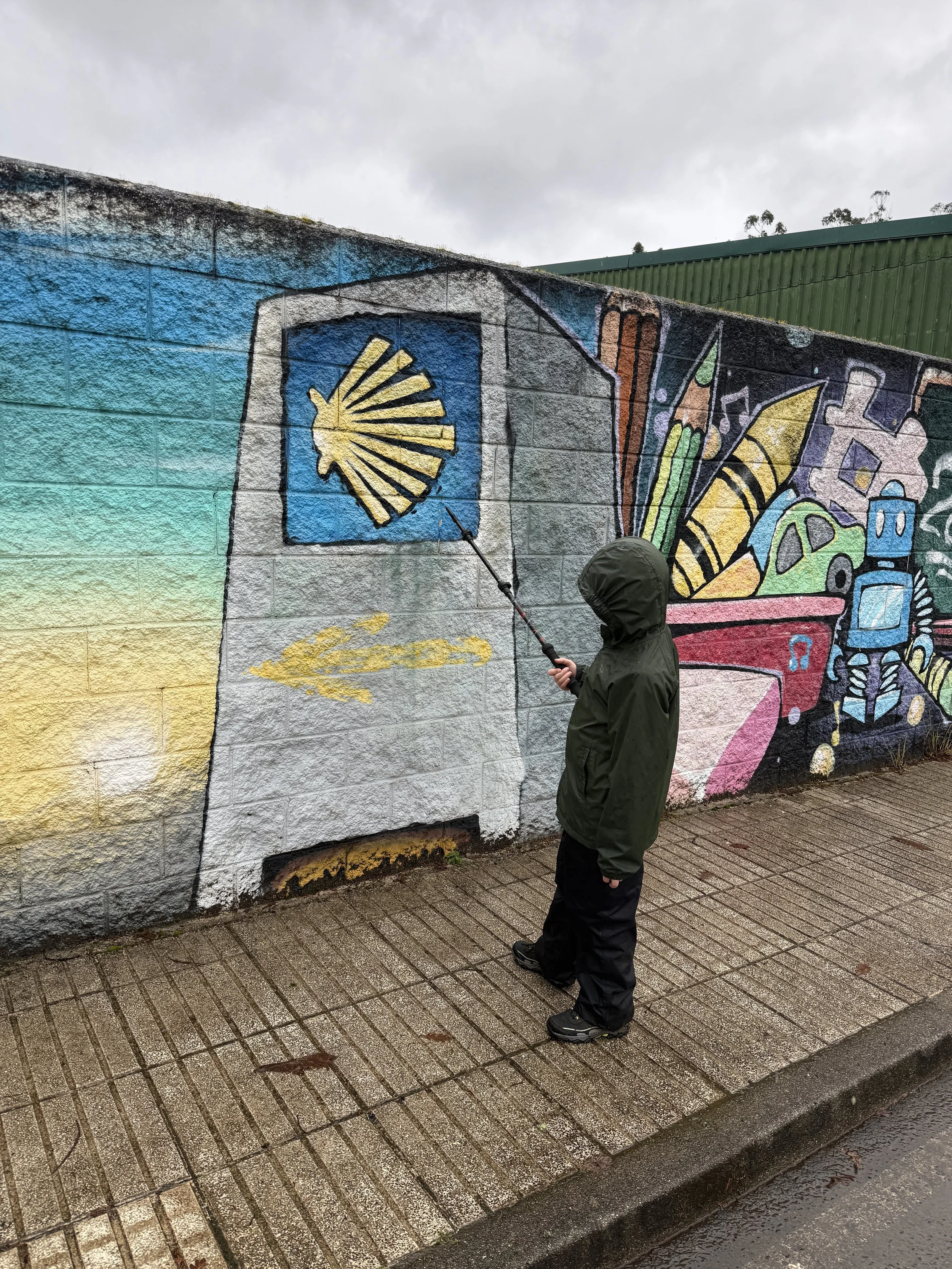
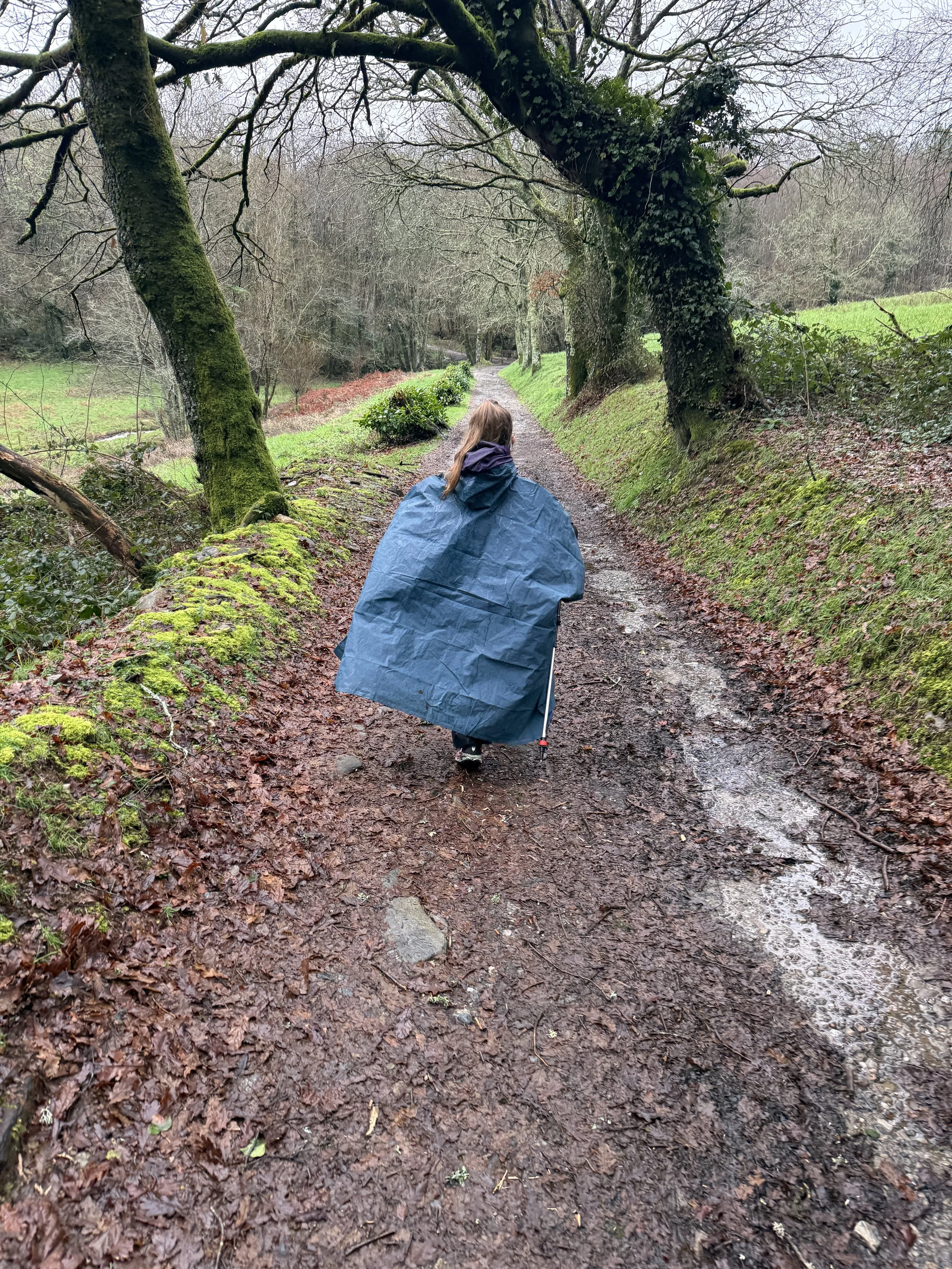
This was the day on our itinerary that I had quietly been worried about.
On paper, it was one of our longest stretches — about 20 km into O Pedrouzo, and I wasn’t sure how everyone would feel by that point in the week. Would the novelty have worn off? Would sore legs finally catch up with us?
But it went so well.
We kept the pace steady, took short snack breaks, and didn’t rush. By this stage, the kids understood the rhythm of the Camino…. walk, look for arrows, count kilometers, stop for a treat, repeat. There’s something empowering about watching them realize they’re capable of more than they thought. The kids had audiobooks to listen to when they needed a distraction, which worked really well to keep them entertained and motivated.
Once we finished this day, I knew we would make it to Santiago. That mental shift was huge. The biggest mileage hurdle was behind us, and everyone was still smiling.
We stayed at White Tree Apartments in O Pedrouzo. It was comfortable and quiet — once again we had plenty of space to spread out and relax. Winter does mean fewer restaurant options, so we had to walk a bit to find one open for dinner, but by this point we were used to being flexible. That’s part of walking the Camino in the offseason — you adapt, you adjust, and somehow it always works out.
Day 8: O Pedrouzo to Santiago (19 km)
The final approach into Santiago de Compostela feels noticeably different from the days before it.
After forests, farm tracks, and tiny stone villages, you gradually transition to pavement, roundabouts, and more traffic. There’s more noise. More people. It feels slightly jarring — like you’re re-entering the modern world after living in a simpler rhythm of walk, eat, rest, repeat.
Part of me missed the quiet woods.
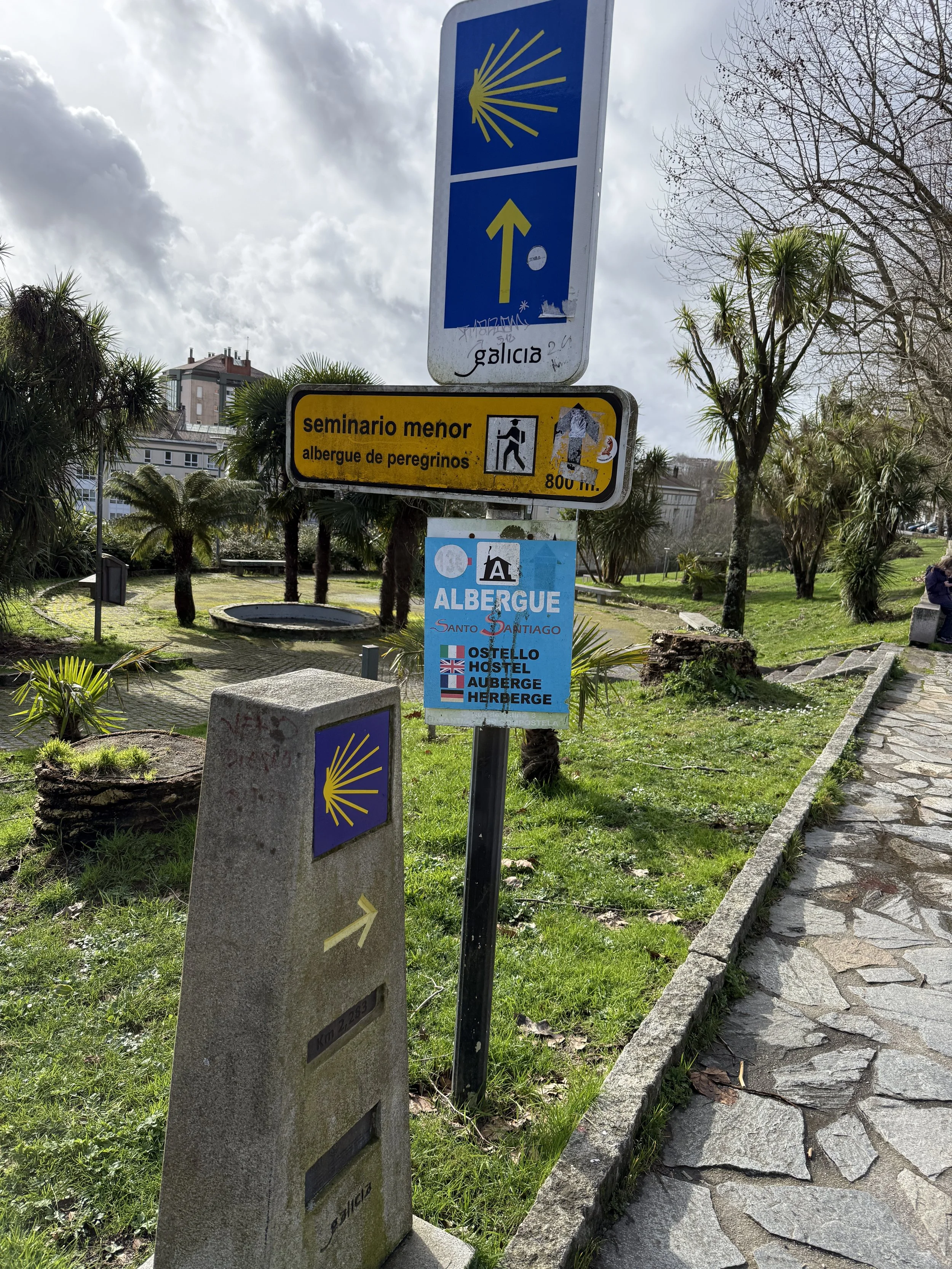
But then you follow the yellow arrows into the old town. The streets narrow. The buildings turn to stone. Footsteps echo slightly on the cobblestones. You can feel something building, even before you see it.
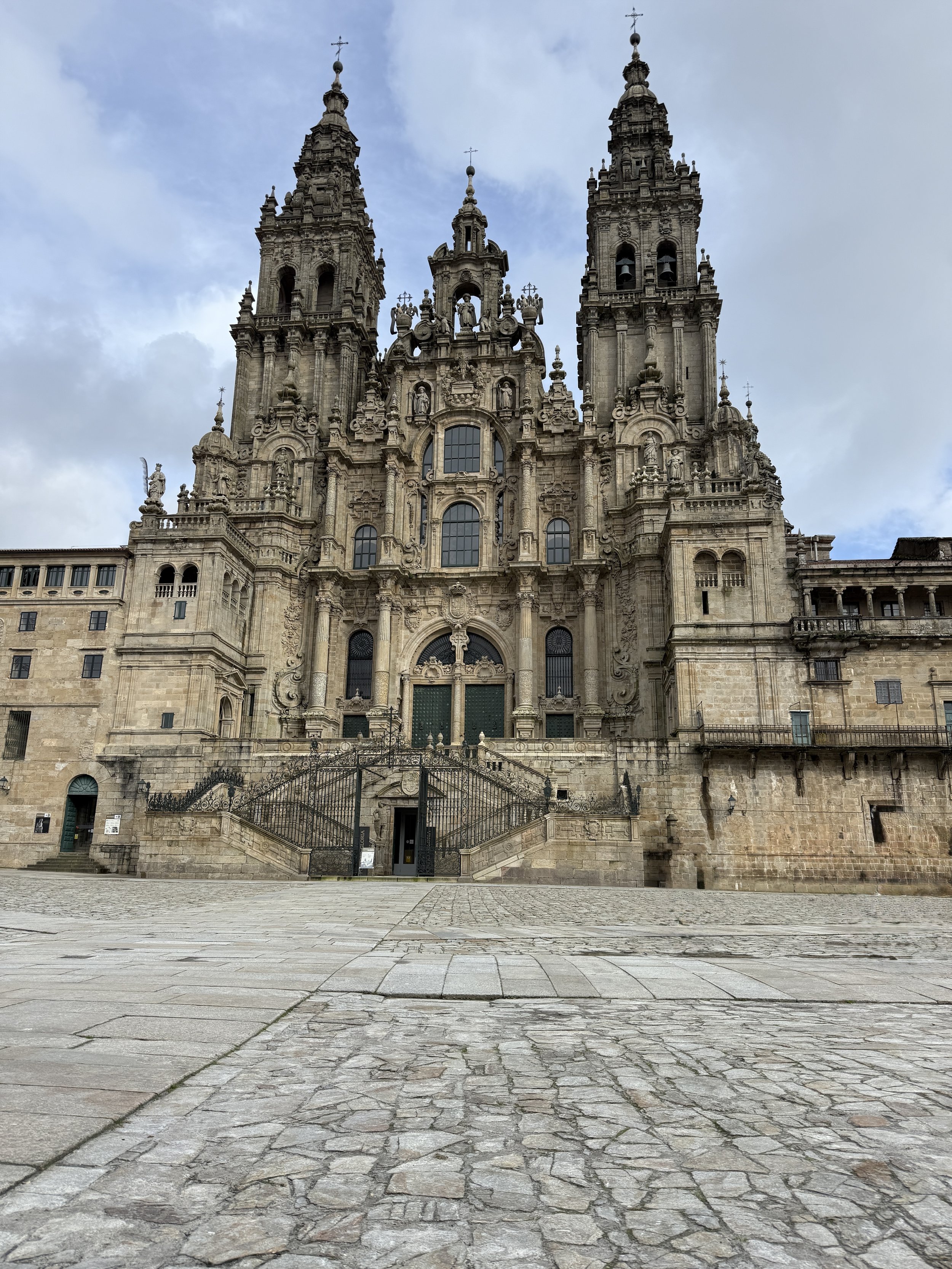
And then suddenly, you step into the Plaza del Obradoiro.
The space opens wide. The cathedral towers above you. And for a moment, everything slows down.
We didn’t rush to take photos. We didn’t immediately line up for our Compostela certificates. We just walked into the square, took off our packs, and sat down on the cold stone.
Eight days earlier, we had stood in Sarria with fresh pilgrim passports and nervous excitement. Now we were here — muddy boots, tired legs, stronger than when we started.
We just let it sink in.
Later, when we collected our certificates, we learned that only 76 pilgrims had arrived that day. In peak summer, that number can be in the thousands. The square felt spacious and calm. No crowds pressing in. No chaos. Just a handful of pilgrims quietly absorbing their own journeys.
That quiet ending felt perfect.
It matched the tone of our entire winter Camino — reflective, peaceful, a little raw, and deeply personal.
Sitting there together as a family, I knew this was something we would carry with us long after the soreness faded.
We headed to Hotel Compostela for an evening of relaxing and an immense feeling of accomplishment!
Practical Tips for Walking the Camino in Winter (With Kids)
If you’re searching for a Camino de Santiago packing list for winter or trying to understand the cost of a self guided Camino, here’s what genuinely worked for our family.
First, we chose to use luggage transfer through Paq Mochila. I cannot overstate how helpful this was, especially walking with kids in winter. Carrying only a light daypack made the daily distances manageable and kept morale high. Arriving at each accommodation and finding our suitcases already waiting for us felt almost magical. After hours of rain or mud, knowing we had dry clothes and warm layers ready made a huge difference.
We kept our walking days between three and five hours. That steady pace allowed for snack breaks, photo stops, and mid morning café visits when we found one open. It also meant relaxed afternoons. We had time to shower, rest, read, and simply recover before the next day. In my experience, this pacing is one of the most important decisions when walking the Camino with kids.
Winter packing matters. Dry socks and dry gloves are absolutely non negotiable. We carried at least one full backup pair of each in our daypacks. On the wettest days, changing into dry gloves halfway through completely shifted everyone’s mood. We layered fleece, lightweight puffy jackets, rain jackets, and rain pants. For the kids, we added ponchos over their rain jackets on heavy rain days, which helped keep backpacks and sleeves drier.
Because many cafés and albergues close during the offseason, we always carried snacks. Nuts, bars, fruit gummies, and simple carbs kept energy stable. We typically found at least one café open around the eight to ten kilometer mark, but having snacks meant we never felt stressed if something was closed.
As for cost, doing a self guided Camino saved us a significant amount of money. Before booking independently, I requested quotes from organized Camino tour companies. Most were roughly four times what we ultimately paid. Booking our own accommodations through Booking.com worked very well. It required more hands on planning and flexibility, especially in winter, but every host was accommodating and kind.
For planning apps, I used both BuenCamino and Wise Pilgrim. I didn’t use Camino Ninja because I didn’t hear about it until later, but it also comes highly recommended.
For us, the combination of luggage transfer, shorter daily stages, practical winter gear, and independent booking made the experience both manageable and meaningful.
Would I Walk the Camino in Winter Again?
Summer is social and lively.
Winter is quiet and reflective.
Ours felt peaceful, authentic, uncrowded, and just adventurous enough.
If you’re wondering whether you can walk the Camino de Santiago in winter with kids — you absolutely can.
And you might just love it.
Buen Camino 🤍