Affiliate Links may be used on this website, at no additional cost to you. This means I may earn a commission if you make a qualifying purchase. There is no charge to you. Thanks for supporting this website!
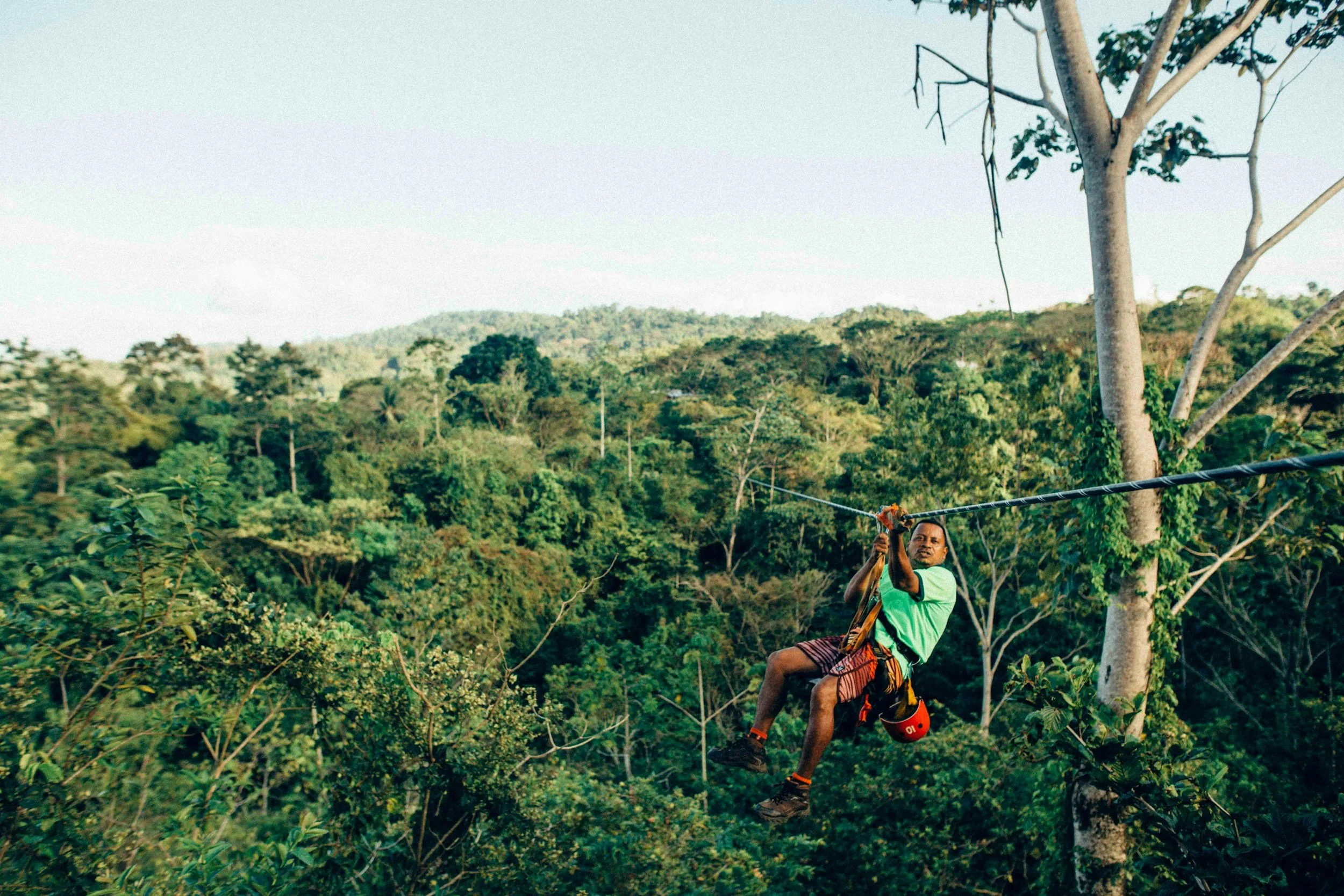
Weight, not age, decides whether a child rides solo on a Costa Rican zip line, since a light rider can stall mid-cable without enough mass to cross a long span. Most canopy parks set a minimum age around 5, but tandem riding, where a guide clips a child to their own harness, extends the activity to younger and smaller kids who don't meet the solo weight cutoff. Arenal and Monteverde have the longest-running parks, while Guanacaste and the areas near Jacó and Manuel Antonio offer solid coastal alternatives. Guide-controlled braking, two points of attachment, and child-sized full-body harnesses separate a well-run tour from a risky one, and closed-toe shoes with a back strap are enforced at every reputable park. Morning slots during the May-to-November green season deliver drier cables and better visibility before afternoon rain moves in.
Most Costa Rican canopy parks set a minimum age around 5 years old, but age is rarely the number that decides whether your kid gets to fly. Weight is. A 5-year-old who weighs 35 pounds often can't ride solo because there isn't enough body mass to carry them across a long cable, so they finish in the middle, dangling, waiting for a guide to pull them in. That single mechanical fact explains almost every policy you'll run into when researching zip lining in Costa Rica with kids.
This walkthrough takes you from "is my kid old enough" to standing on the first platform with the right shoes, the right park, and the right expectations. It covers age and weight minimums, how tandem lines work for little ones, how to handle a family with a 15-year-old and a 6-year-old on the same tour, and what the day really looks like once you're clipped in.
Weight matters more than age for harness fit and cable physics
Canopy tours in Costa Rica publish an age floor because it's easy to communicate, but the operational limit is the harness and the cable. Harnesses have a size range. Cables have a sag profile. Too light and gravity won't carry a rider to the far platform; too heavy and braking distance gets unpredictable.
Before you fall in love with a specific park, weigh your kids and write the number down. Then confirm the park's minimums directly with the operator, because these policies shift and park websites aren't always updated at the same pace as the on-the-ground rules.
Under the solo minimum: ask specifically about tandem riding, where a guide clips your child to their own harness and rides with them.
Just above the solo minimum: ask whether the park assigns a guide to ride directly behind light riders on the longest cables.
Teens and adults: confirm the maximum weight too. Most parks have one, and it matters more than families expect.
One more thing worth asking: can a nervous kid switch to tandem mid-tour? Some parks say yes without fuss, some say no once you've started. That answer tells you a lot about how flexible the staff will be with your family in general. Our pick is always the park that says yes.
Solo, tandem, and bridge tours serve different skill levels and ages
There are really three versions of this activity for a family, and picking the wrong one is how parents end up with a crying child on a platform 150 feet up.
Solo riding suits kids who meet the weight minimum comfortably, have reasonable body awareness, and have already handled something like a high ropes course, a climbing wall, or a chairlift without panic. Most kids 8 and up are fine here.
Tandem riding is the answer for preschoolers and small 5- to 7-year-olds. The guide controls the brake, the speed, and the landing. Your kid's only job is to hold on and yell. It's the better option for a first-timer of any age who's unsure, not a consolation prize.
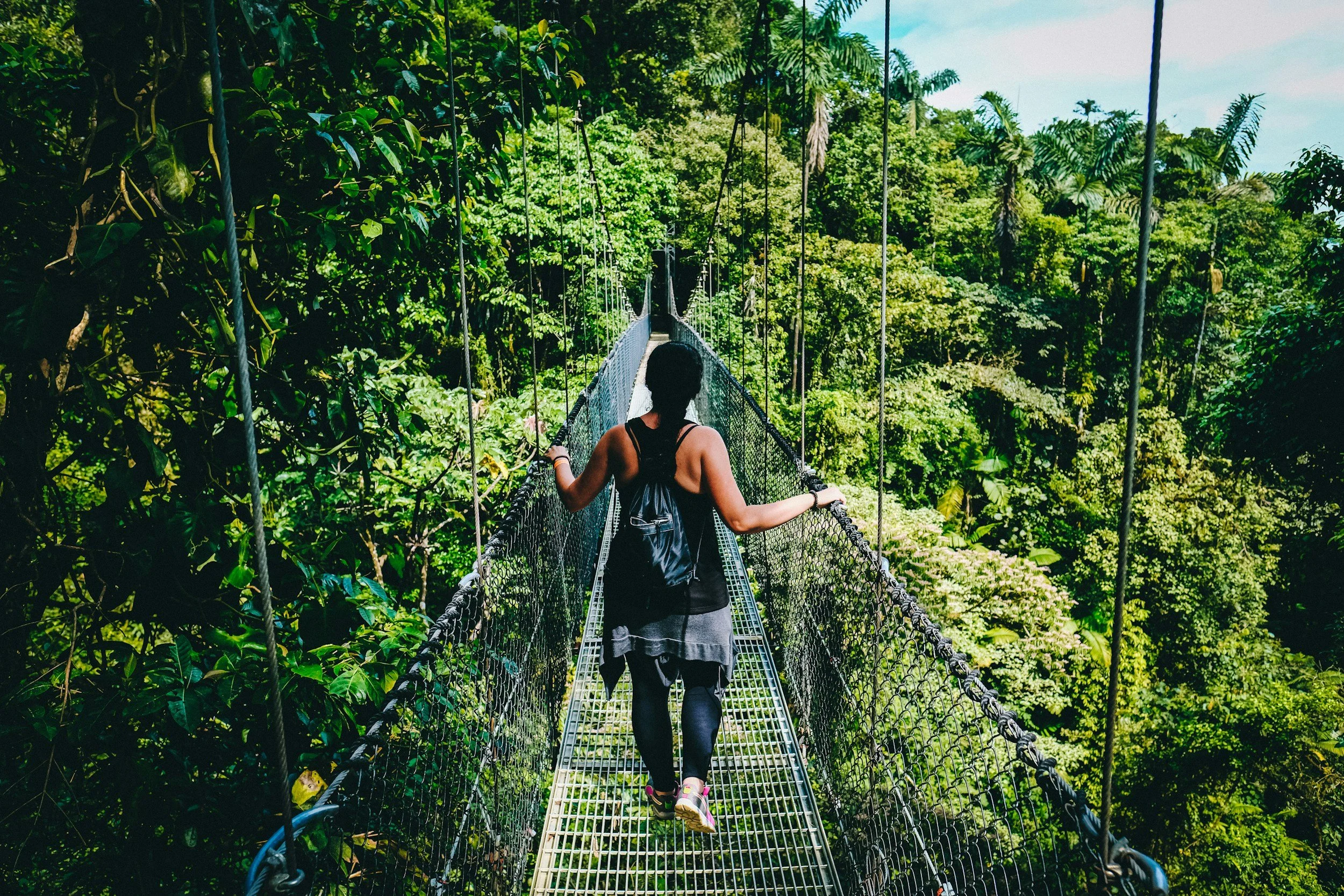
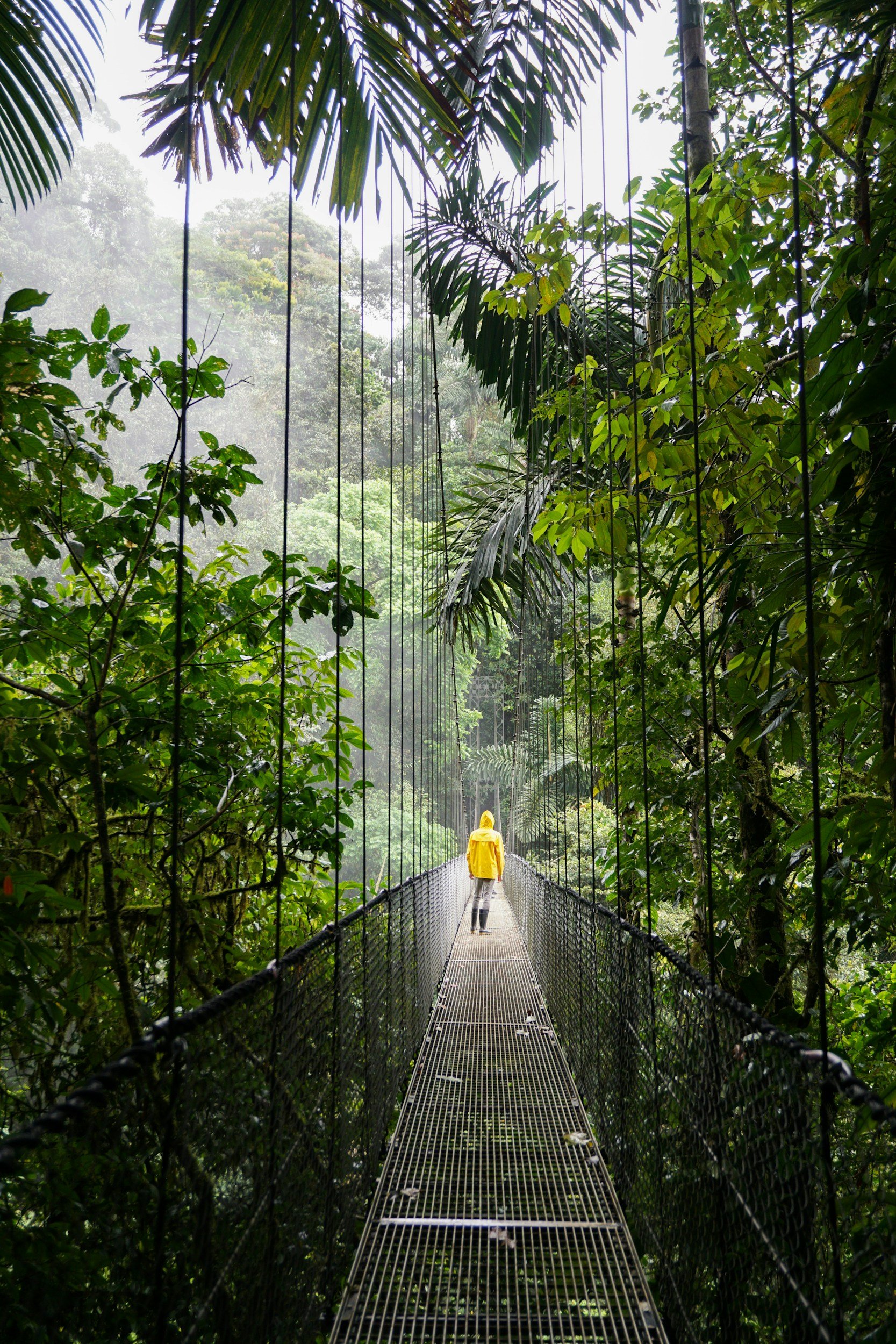
Skipping the cables entirely is underrated. Hanging bridge walks through the same canopy give you the identical treetop view, no harness, no age floor, and a toddler in a carrier can come along. If your crew includes a 3-year-old, book the bridges and save the zip line for the next trip. Our round-up of which adventures suit which ages breaks that calculus down further for anyone weighing the whole trip at once.
If you're unsure whether your child is ready, book tandem. A kid who loved their first tandem ride will beg to go solo next time. A kid who got talked into solo and froze mid-cable may never want to try again.
Arenal and Monteverde have the longest track record for zip lining in Costa Rica with kids, but coastal parks work too
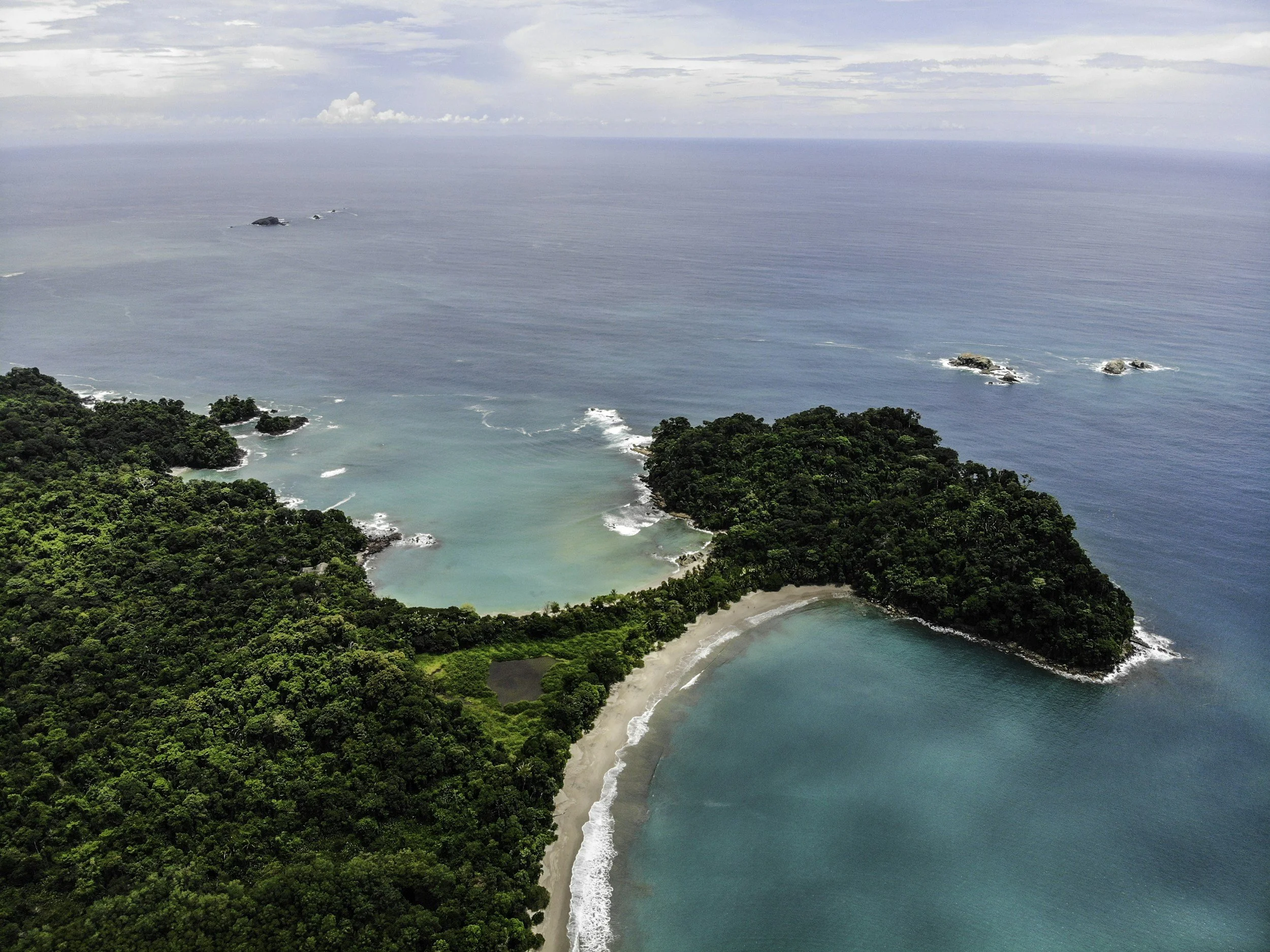
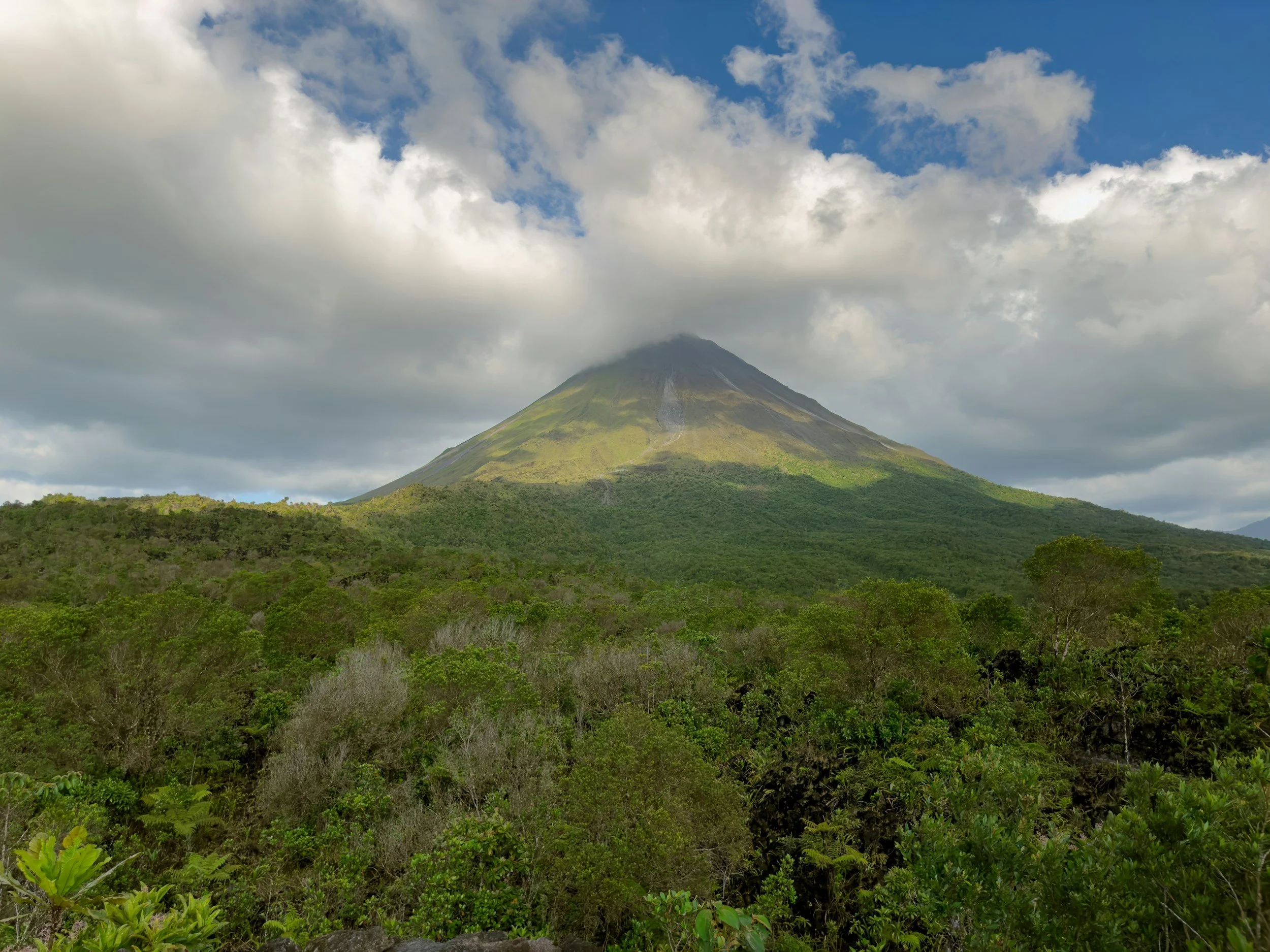
Arenal and Monteverde dominate the search results for a reason: the cloud forest and volcano views are spectacular, and the parks there have been running canopy tours for decades. But if your itinerary keeps you on the Pacific coast, you do not need to drive five hours inland to zip line. Guanacaste has solid family canopy options, and so do the areas near Jacó and Manuel Antonio.
Here's how the better-known family parks compare on the things parents really care about. Always confirm current ages, weights, and rates directly with the operator before booking, since these change seasonally.
| Park | Region | Typical minimum age | Tandem for little ones | Good combo add-ons |
|---|---|---|---|---|
| Sky Adventures Arenal | La Fortuna / Arenal | Around 5 | Yes, confirm when booking | Aerial tram, hanging bridges |
| Sky Adventures Monteverde | Monteverde cloud forest | Around 5 | Yes, confirm when booking | Tram ride, bridges, night walk |
| Arenal Ecoglide | La Fortuna / Arenal | Young kids accepted with guide | Yes | Tarzan swing, volcano views |
| Selvatura Park | Monteverde | Young kids accepted with guide | Yes | Hanging bridges, butterfly and sloth exhibits |
| Diamante Eco Adventure Park | Guanacaste | Varies by activity | Yes | Wildlife sanctuary, beach access, ATV |
| Congo Canopy | Guanacaste | Young kids with guide | Yes | Tarzan swing, monkey viewing |
On pricing: expect a meaningful gap between the big-name canopy parks and the smaller local operations, and expect child rates to run below adult rates at most parks. Rather than quoting figures that go stale, pull up two or three operators' current rate pages side by side, or check what the same tour costs through a booking platform like Viator, where family pricing and age restrictions are usually listed up front.
If you're still building the route, our region-by-region plan for every age helps you figure out whether Arenal or the coast deserves more of your week, and the free 10-day Costa Rica itinerary slots canopy days into a realistic driving schedule.
Mixed-age groups need layered activities or separate tour times
Nobody covers this well, and it's the single most common real-world situation: a 15-year-old who wants the longest, fastest cable, a 12-year-old who's game but cautious, and a 7-year-old who may or may not make weight. Booking one tour for all three is where the day falls apart.
Three approaches work, in rough order of how well they hold up.
Pick a park with layered activities on one property. The big canopy parks run a zip line circuit, a tram or bridges, and often a wildlife exhibit on the same ticket footprint. Teens ride the full circuit, the little one rides tandem for part of it or does the bridges with one parent, and everyone eats lunch together. This is the best option when it's available.
Split the morning, merge the afternoon. One parent takes the older kids on the full canopy tour, the other takes the youngest to a hot spring, a sloth walk, or a river float. You reconvene at lunch and everyone has a story. Slightly more logistics, zero compromise.
Book the shortest family circuit for everyone. Fewer cables, lower platforms, faster finish. The teens will tell you it was too short. They'll also remember it. This works when you only have one free afternoon.
What doesn't work is booking the longest, highest tour and hoping the youngest rallies. Cable circuits are a one-way commitment. Once you're on platform three of eleven, the only way out is forward or a guide walking a scared child down a service trail, which is miserable for everyone.
Guide-controlled braking and dual attachment points are non-negotiable
Canopy tours in Costa Rica are generally well run, but "generally" isn't a plan. Before you book, look for a few specific things. Any decent operator will answer these on the phone or by WhatsApp without hesitation, and hesitation is itself an answer.
Braking system. Guide-controlled or automatic braking is what you want for kids. Hand-braking, where the rider presses a gloved hand against the cable behind them, puts a judgment call in a 7-year-old's hands at 30 miles per hour.
Two points of attachment. Riders should be connected by a primary trolley and a backup line at all times, including on the platforms.
Guide-to-guest ratio. Ask how many guides run a group of your size. A guide sends riders off, and a guide receives them at the far platform. If one person is doing both, walk away.
Harness sizing for kids. Parks that take young children should have child-specific full-body harnesses, not just a small adult sit harness cinched down. Full-body is what keeps a light kid upright if they go upside down.
Insurance and certification. Ask whether the park carries liability coverage and whether the cables are inspected on a published schedule. Reputable operators state this plainly.
The safety briefing is also a tell. A good park demonstrates the body position, has kids practice the landing on a short low cable before the big ones, and checks every harness twice. If the briefing is thirty seconds in rapid Spanish and a thumbs up, that's not the tour for your family. For broader peace of mind on the trip overall, we walk through what's worth worrying about and what isn't in our take on family safety in Costa Rica.
Morning slots beat afternoon rain in Costa Rica's rainy season
Canopy tours run rain or shine, which sounds charming until you're clipped to a cable in a cloud forest downpour with a 6-year-old who can't see the next platform. Rain doesn't usually cancel the tour. It just changes the experience a lot.
Book morning slots. In Costa Rica's green season, roughly May through November, mornings are typically clear and afternoon rain rolls in with some reliability. A 7:30 or 8:00 a.m. start gives you dry cables, better visibility, and more wildlife moving in the canopy. Monteverde adds its own wrinkle: the cloud forest is often socked in regardless of season, and the wind up there can be strong enough that parks pause operations temporarily.
Dry season, roughly December through April, is the safer bet for a guaranteed view, and February in particular tends to deliver on both weather and wildlife. If your trip lands in the rainy months, build a backup day into the itinerary rather than booking the canopy tour for your last morning before a flight.
Closed-toe shoes with heel straps are strictly enforced
Footwear is the one thing parks will really turn you away for. Closed-toe shoes with a back strap, period. Flip-flops, slides, and open-heel sandals get refused at the harness station, and the alternative is a kid sitting out while their siblings fly.
Closed-toe sneakers or trail shoes for every rider, laces tied tight
Hair tied back for anyone with long hair, since it tangles in the trolley and the chin strap
No loose items in pockets because phones, sunglasses, and souvenir coins all end up in the understory
Chin-strap hat or no hat, your call, but a loose ball cap is gone on the first line
Light long sleeves to stop harness straps rubbing bare shoulders
Bug spray applied before the harness goes on, not after
Camera strategy decided in advance, usually a chest-mounted action camera or buying the park's photos, because no one is taking a phone out mid-cable
Leave the backpack in the car or the park lockers. Guides carry water on most circuits, and you don't want extra weight shifting on a kid's back. Everything else you'll want for the trip is on our Costa Rica family packing list, including the rainforest-specific stuff that's easy to forget.
The first cable feels scarier than kids expect; prepare them for platform vertigo
Here's the part that determines whether your child has a great day: the first cable is almost always the hardest, and nobody warns kids about that. They've seen videos of people laughing and spinning. What they haven't seen is the moment of standing on a wooden platform, harnessed, looking down through the gap in the boards.
Tell them in advance. Something like: your stomach will drop when you step off, it lasts about two seconds, and then it's the best feeling. Kids handle a predicted scary feeling far better than a surprise one.
A few other things worth saying out loud before you go:
The guide will do all the clipping and unclipping. You never touch the equipment.
You sit back in the harness. You don't hold yourself up. The harness holds you.
You can yell as loud as you want. Everyone does.
If you don't want to go on a cable, tell the guide. There's no shame, and guides have handled this a hundred times.
Most tours run between one and three hours and cover anywhere from five to a dozen-plus cables. Ask the number before booking. A family circuit with seven or eight cables is a sweet spot for kids under 10: long enough to feel like a real adventure, short enough that nobody's arms and attention give out on the back half. If you're pairing the canopy with a volcano day, the Arenal guide for young families sorts out which hot springs and hikes pair best with a morning on the cables.
Weigh your kids tonight, then ask parks about solo and tandem options
Start with the weight check tonight, because it determines everything else. Then message two parks in whichever region your itinerary already includes and ask three questions: what's the minimum weight for solo riding, do you offer tandem, and can we switch a child to tandem mid-tour. The answers will sort your options fast.
Zip lining in Costa Rica with kids tends to be the thing they talk about for years afterward, long after the beach days blur together. Book the morning slot, pack the closed-toe shoes, and let the guides handle the rest.
Frequently asked questions
What is the minimum age for zip lining in Costa Rica with kids?
Zip lining in Costa Rica with kids is typically allowed around 5 years old at most of the larger canopy parks, including the Sky Adventures parks in Arenal and Monteverde. Some operators accept younger children on tandem lines where a guide rides with them. Weight is the stricter gate in practice, so confirm both numbers with the park before you book.
Can a 4-year-old zip line in Costa Rica?
Sometimes, on a tandem line only, and it varies by operator. A guide clips your child into their own harness and controls the speed and braking. If no tandem option exists at the park you want, hanging bridges give a 4-year-old the same canopy experience with no harness at all.
How much does a family zip line tour cost?
Expect child rates to come in below adult rates at most parks, with the established canopy operators priced well above smaller local tours. Rates shift seasonally and by combo package, so check the operator's current pricing page or compare the same tour across booking platforms rather than relying on a figure from an older article.
Is zip lining safe for children?
Yes, at a properly run park. Look for guide-controlled or automatic braking, two points of attachment at all times, child-sized full-body harnesses, and enough guides that one person sends riders off while another receives them. A park that spends real time on the safety briefing and does a practice run on a short cable is showing you how it operates.
What should kids wear to zip line?
Closed-toe shoes with a back strap, which parks enforce strictly, plus light long sleeves to stop harness rub, hair tied back, and nothing loose in pockets. Apply bug spray and sunscreen before the harness goes on. Leave backpacks and sunglasses in the car or a locker.
Happy Adventuring!
Jen