Family Trip Planning: A Practical System for Organizing Travel with Kids
Affiliate Links may be used on this website, at no additional cost to you. This means I may earn a commission if you make a qualifying purchase. There is no charge to you. Thanks for supporting this website!
Family trip planning works best as a repeatable system, run the same way every time, so the decisions that matter most get made on purpose instead of the night before you leave. A complete family travel budget breaks into five categories, transportation, lodging, food, activities, and the often-forgotten costs like baggage fees, resort fees, tips, and souvenirs, and skipping any one of them is where budgets tend to blow up without warning. The right destination depends almost entirely on the ages of the kids traveling, since a trip that works beautifully with a nine-year-old is a different logistical reality with an eighteen-month-old. A one-anchor-activity-per-day itinerary, with real open time built in and nothing scheduled on travel days, is the rhythm that holds across ages and prevents the 4pm meltdown. Twenty minutes of contingency planning before the trip, knowing the rebooking policy, packing a medicine kit, photographing passports, covers the scenarios that derail families who skipped it.
The single biggest reason family trips fall apart isn't a missed flight or a rainy day. It's trying to plan the whole thing in your head while three kids ask for snacks. Family trip planning works best as a repeatable system, one you run the same way every time, so the parts that matter (budget, dates, who sleeps where) get decided on purpose instead of in a panic the night before you leave.
This is the full process we use to plan travel with kids, start to finish, in one place. No five-part series, no clicking through ten checklist posts. We'll set a budget with the costs most families forget, pick a destination that fits your kids' actual ages, lock in dates around school and shoulder seasons, book flights without overpaying, find accommodations that don't fall apart at bedtime, build an itinerary that leaves room to breathe, pack smart, and plan for the inevitable day something goes sideways. There's a printable checklist at the end too.
Read it top to bottom the first time. After that, you'll have a system you can run on autopilot for every trip.
Before You Start: Define Your Family's Travel Style and Non-Negotiables
Every good plan starts with two frank conversations, and neither one is about destinations. The first: what does your family enjoy? Some families want to be in the ocean by 8am every day. Others want one big activity and a lot of pool time. We've found the families who travel happily are the ones who plan around their real rhythm, not the highlight reel they think they should want.
The second conversation is about non-negotiables. These are the things that, if you skip them, the trip falls apart. For a family with a toddler, that might be a kitchen and a separate bedroom for nap time. For a family with a tween, it might be reliable wifi and at least one day that isn't packed with parent-chosen activities. Write your non-negotiables down. Three to five is plenty. They become your filter for every decision that follows, which means you stop debating the same trade-offs over and over.
One quick gut-check on pace: are you a "see everything" family or a "settle in" family? There's no wrong answer, but choosing one up front saves you from over-scheduling later. If the idea of unpacking once and exploring slowly appeals to you, our take on slowing down and traveling deeper is worth a read before you book anything.
Step 1: Set Your Budget (Including the Costs Most Families Forget)
A family travel budget isn't one number, it's five. Most families set a flight budget, maybe a hotel budget, then get blindsided by everything in between. Break it into categories and the whole trip becomes predictable.
Here are the five buckets to plan for, with rough ranges so you have a starting point. (These are illustrative ranges for a family of four, not quotes. Your real numbers shift hugely by destination and season.)
| Category | What it covers | Sample range (family of 4, one week) |
|---|---|---|
| Transportation | Flights, rental car, gas, parking, transfers | $800–$3,000 |
| Lodging | Hotel, vacation rental, resort fees | $700–$3,500 |
| Food | Groceries, restaurants, snacks, coffee | $500–$1,400 |
| Activities | Tours, tickets, gear rentals, lessons | $300–$1,500 |
| The forgotten stuff | Travel insurance, baggage fees, tips, souvenirs, a buffer | $300–$800 |
That last row is where budgets tend to blow up without warning. Checked-bag fees for a family add up fast. Resort fees and parking can tack on real money per night that never appeared in the headline price. And kids will want a souvenir, so build it in rather than fighting it daily.
To save toward the total, we like working backward: divide your target by the number of months until the trip, then move that amount into a separate account automatically. Saying a trip costs "$3,600" feels heavy. Saying it costs "$300 a month for the next year" feels doable. Same number, different relationship with it.
One genuine money-saver families overlook: a vacation rental with a kitchen can cut your food budget nearly in half versus eating every meal out, and it doubles as a calmer space for early bedtimes. The lodging line might go up, but the food line drops more.
Step 2: Choose the Right Destination for Your Family's Ages and Interests
The best destination for your family depends almost entirely on the ages riding in the back seat. A trip that's magic with a 9-year-old can be a slog with an 18-month-old. Match the place to the people, not the other way around.
Traveling with infants and toddlers (0–3)
At this age, shorter is smarter. Long-haul flights and big time-zone jumps are hard on tiny bodies and on you. Favor direct flights, short drive times once you land, and destinations with easy access to a kitchen, laundry, and a pharmacy. The activity itself barely matters to a toddler. The logistics around naps, food, and meltdowns matter enormously. A relaxed beach week or a single home base you don't have to leave beats a multi-city marathon every time.
Traveling with grade-school kids (4–10)
This is the sweet spot for adventure. Kids this age can hike a real trail, snorkel, take a surf lesson, and remember it forever. They have stamina and curiosity but still nap-adjacent down time helps. Costa Rica shines here, which is why we keep coming back, our roundup of the best things to do in Costa Rica with kids is built around exactly this age range. Maui works beautifully too. Mix one active morning with a slow afternoon and you've nailed the rhythm.
Traveling with tweens and teens (11+)
Older kids want a say, so give them one. Hand a tween some ownership over a day of the itinerary and watch the eye-rolling drop. They can handle longer travel days, bigger hikes, and cultural experiences that would lose a 5-year-old. The trade-off: they need real connectivity and a little independence built in. A family ski trip lands well at this age, and our pick for the best ski resort for a family ski trip walks through what makes a mountain work for mixed ages.
Whatever the ages, run each candidate destination through your non-negotiables from the start. If a place can't deliver your top three, it's off the list, no matter how dreamy the photos look.
Step 3: Lock In Your Dates (School Calendars, Shoulder Seasons, and Lead Times)
Dates drive your entire budget. The same trip in mid-July versus early May can differ by hundreds of dollars per person, plus the crowds. Three forces decide your window: the school calendar, the destination's season, and how far ahead you book.
If your kids are in school, your flexibility is limited to breaks, holidays, and summer, which is also when prices peak. A few moves help. Pull kids a day or two early around a long weekend to dodge the worst of the crowds and pricing. Lean on shoulder seasons (the weeks just before or after peak) when weather is still good but rates and lines drop. For tropical destinations especially, timing is everything, our case for visiting Costa Rica in February is really a shoulder-season strategy in disguise.
Booking lead times vary by trip type. As a rough guide:
Domestic flights: book 1–3 months out for the best fares.
International flights: 2–6 months out, longer for peak summer or holiday travel.
Popular accommodations and rentals: 6–12 months for school-break weeks at in-demand spots.
Sought-after tours and lessons: as soon as your dates are firm, since the good ones sell out.
Pick your dates before anything else gets booked. Everything downstream depends on them.
Step 4: Book Flights Strategically for a Family
Booking flights for a family is a different sport than booking for one. The goal isn't the absolute cheapest seat, it's the combination of price, timing, and sanity that gets everyone there in one piece. If you can fly direct, do that!!
Start with flexible date searches so you can see how price moves across a week. Mid-week departures usually beat weekends. Set a price alert as soon as you know your route, then book when it dips into your range rather than waiting for a bottom that may never come.
A few family-specific moves matter more than chasing the rock-bottom fare:
Protect your nap and bedtime windows. A slightly pricier flight that lands before bedtime is worth it when the alternative is a 11pm arrival with overtired kids.
Direct beats cheap-with-a-connection when you've got little ones. The savings rarely cover the cost of a missed connection with a stroller and a diaper bag.
Pay to sit together. Don't gamble on the airline seating a 4-year-old next to a stranger for free. Confirm seats at booking.
Know the lap-infant rules. Under-2s often fly free or discounted on a lap, but you lose a seat and the bassinet options vary by airline. Decide deliberately.
If your trip involves a long-haul leg, knowing the actual flight time helps you plan the day, our breakdown of how long the flight to Italy takes is the kind of detail that decides whether you book a red-eye or a daytime crossing.
Step 5: Find Family-Friendly Accommodations That Work

"Family-friendly" on a booking site means almost nothing. The places that truly work for families share specific, checkable features, and the listing photos rarely show them. Read the fine print, not the marketing.
What we look for, in order: a separate space for kids to sleep (so adults aren't trapped in the dark at 7:30pm), a kitchen or at least a fridge and microwave, laundry for trips longer than four days, and a location close to the things you came for. A resort with a kids' club and shallow pool can be worth the premium for younger kids. A vacation rental with room to spread out tends to win for school-age and up.
The accommodation question that matters most isn't "is it nice?" It's "where do the kids sleep, and where do the adults go after they do?" Answer that and the rest sorts itself out.
Location deserves real thought. A cheaper place 40 minutes from everything you want to do can cost you more in rental-car hours and frayed nerves than it saves. When we plan a Maui trip, we choose the side of the island first, then the property, because the geography decides the daily drive, our guide to where to stay in Maui breaks that decision down by region. The same logic applies anywhere with spread-out attractions.
Step 6: Build a Realistic Family Travel Itinerary (Without Over-Scheduling)
The most common itinerary mistake is planning the trip you'd take without kids. Adults can power through five activities a day. Kids can't, and shouldn't have to. The rhythm that works: one anchor activity per day, plus open time.
Pick one main thing each day, a hike, a snorkel trip, a museum, a beach, and build everything else loosely around it. Mornings tend to work best for the big effort, since kids start the day with the most energy and the crowds are thinnest. Afternoons leave room for a pool, a nap, or doing nothing. Cramming a second major activity into the afternoon is how you end up with a meltdown at 4pm and a vow to never travel again.
Leave whole blank slots on purpose. Some of the best trip memories come from the unplanned hour at a tide pool, not the timed-entry attraction you rushed to make. A written itinerary should be a flexible frame, not a minute-by-minute schedule. If you want a structure to drop your plans into, our free travel itinerary planner template lays out day-by-day blocks with space for the loose stuff, and for a worked example, the 8-day Costa Rica itinerary shows the one-anchor-a-day rhythm in action.
One more rule: never schedule a big activity for arrival day or departure day. Travel days are full days on their own. Treat them that way and the rest of the trip flows.
Step 7: Pack Smart With Kids (Age-by-Age Tips and a Free Checklist)
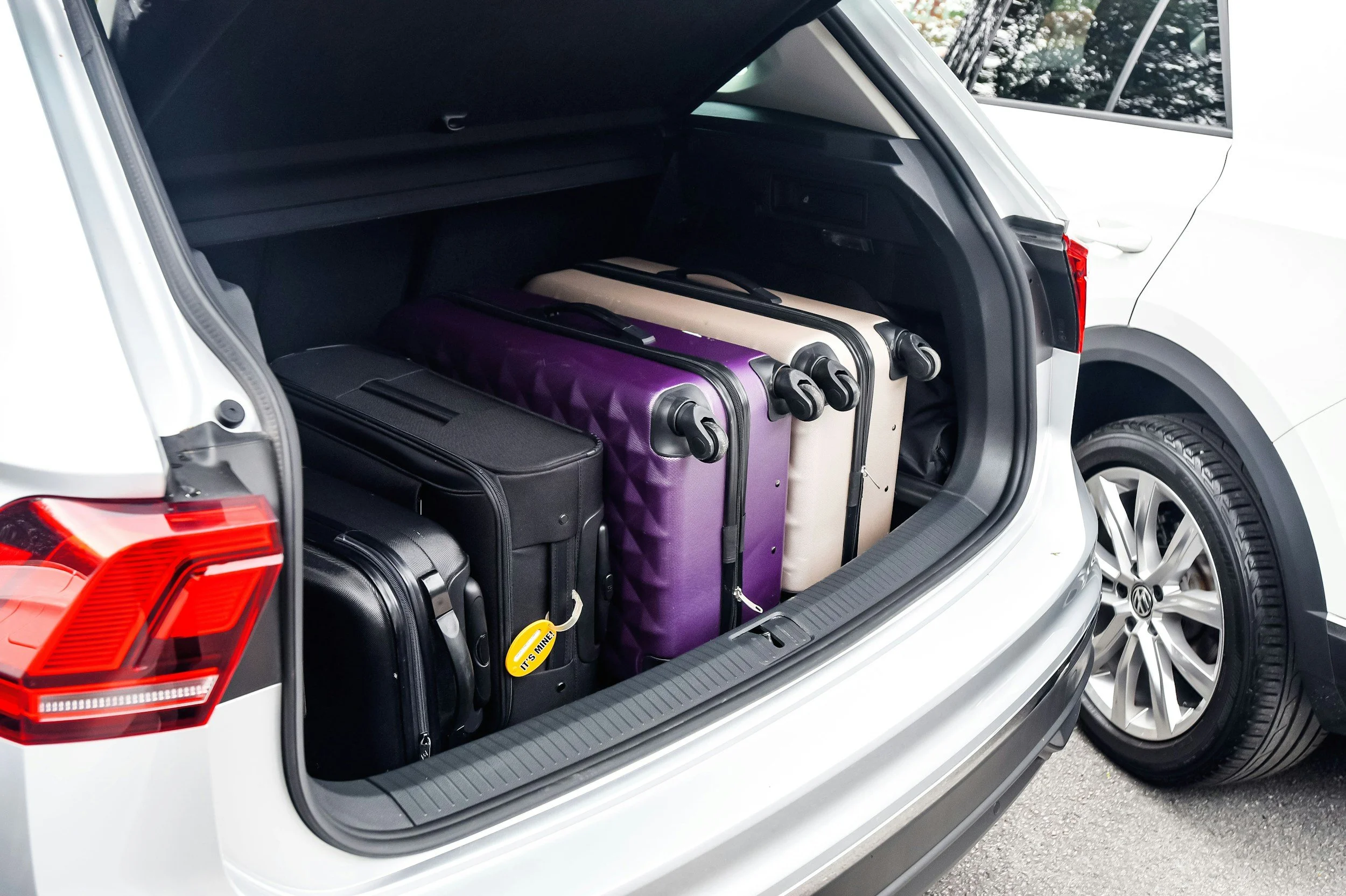
Packing for a family is where good plans go to die, usually because it happens last and in a rush. The fix is a reusable checklist you tweak per trip instead of rebuilding from scratch every time. Pack by category, not by person, so you can see at a glance whether the sunscreen made it in (it didn't).
What changes by age:
Infants and toddlers: the gear list is long, diapers, wipes, a portable crib if the rental lacks one, a carrier, familiar snacks, and a comfort item that does not get checked. Buy bulky consumables at your destination instead of hauling them.
Grade-school kids: let them pack a small backpack of their own entertainment and a favorite layer. Ownership cuts complaints, and you'll need their hands free anyway.
Tweens and teens: hand them a checklist and make them responsible for their own bag. It's good practice, and it's one fewer thing on your plate.
Whatever the destination, two things belong in your carry-on, not the checked bag: a change of clothes for each kid and any medication. Lost luggage is survivable. A toddler in a diaper blowout with no spare outfit, at 30,000 feet, is a different kind of trip. For beach destinations, our printable family beach day packing list covers the sand-and-sun specifics families always forget, and the full Maui packing guide is a good model for any tropical trip.
Planning a Multi-Family or Group Trip: Extra Considerations
Traveling with another family multiplies the fun and the logistics. The trips that work have a few decisions locked in before anyone books a flight. The ones that strain friendships skip them.
Settle these four things up front, in writing if you can:
Money. How are shared costs split, and who fronts the deposit? Agree on whether you're pooling for groceries and rental cars or keeping everything separate. Use a shared expense app so nobody's doing math on the last night.
Togetherness vs. independence. Decide that you won't be joined at the hip for every meal and activity. The healthiest group trips plan a few shared anchors and leave the rest to each family. Built-in space prevents friction.
Sleep and schedules. If one family has a baby on a 7pm bedtime and another has teens who want to stay out, plan lodging with enough separation that neither resents the other.
The decider. For each big choice, agree who has the final say so you're not negotiating eight opinions in real time. Rotate it if you like, but name it.
A large vacation rental usually beats separate hotel rooms for group trips, more common space, shared kitchen, lower per-family cost. Just confirm the bedroom-to-family ratio works before you commit.
Best Tools and Apps for Family Trip Planning
You don't need a dozen apps. You need one place to keep everything and a couple of tools that solve specific problems. Here's the workflow we'd recommend rather than a scattered list.
Keep your master plan in one shared document, Google Docs or a shared note both parents can edit, holding confirmation numbers, addresses, the loose itinerary, and the packing list. One source of truth beats five apps you forget to open. For flights, set price alerts through a flight-tracking tool and let it watch the fare while you live your life. For packing, a list app like PackPoint can generate a starter list by destination and length, then you customize it.
For activities and reviews, the big platforms (Tripadvisor, Google Maps saved lists) are fine for crowd-sourced opinions, just read recent reviews from families specifically. And if you're traveling internationally, sort out connectivity before you go rather than fighting airport wifi, our family relies on a travel eSIM, and our notes on how a data eSIM kept us connected in Mexico explain why it's worth setting up in advance.
The tool that matters most is the boring one: the shared document. Everything else is optional.
What to Do When Things Go Wrong (Contingency Planning)
Something will go wrong. A flight delays, a kid spikes a fever, the weather turns. The families who handle it best aren't lucky, they planned for the wobble before it happened. This is the section every other planning guide skips, and it's the one that saves the trip.
Build a small contingency kit into your plan:
For flight delays and cancellations: know your airline's rebooking policy, keep snacks and a charged battery pack in the carry-on, and have one backup activity in mind for the destination airport area. Travel insurance is worth the cost for big trips, read what it covers before you buy.
For sick kids: pack a small medicine kit (fever reducer, rehydration packets, bandages, any prescriptions) and look up the nearest clinic or pharmacy at your destination before you need it. Knowing where to go cuts the panic in half.
For bad weather: have a rainy-day list per destination, indoor options you'd truly enjoy. A printable game in your bag turns a stuck-inside afternoon into a good memory, which is exactly why we made our Passport Panic family escape game to travel with.
For lost documents or bags: photograph passports and key reservations, store copies in your shared doc, and keep one credit card separate from your wallet.
The point isn't to expect disaster. It's to spend twenty minutes up front so that when the small stuff hits, you shrug instead of spiral. Kids take their cue from you. A calm parent makes a delayed flight an adventure instead of a crisis.
Family Trip Planning Checklist (Printable Summary)
Here's the whole system in one scannable list. Work it top to bottom and you'll have a trip that's planned on purpose.
Define your family's travel style and write down 3–5 non-negotiables
Set a budget across all five categories, including the forgotten costs and a buffer
Choose a destination that fits your kids' actual ages and your non-negotiables
Lock in dates using school calendars, shoulder seasons, and the right booking lead times
Book flights strategically, protecting nap/bedtime windows and confirming seats together
Find accommodations with separate sleep space, a kitchen, and a smart location
Build a one-anchor-a-day itinerary with real open time and no activities on travel days
Pack by category from a reusable checklist; carry-on the spare clothes and medicine
Sort group-trip money, space, and decision-making before anyone books
Set up your shared planning doc, price alerts, packing app, and connectivity
Build a contingency kit for delays, sickness, weather, and lost documents
Save this page, run the list, and adjust it to your family. The first trip you plan this way takes effort. Every one after that gets faster, because you're running a system instead of starting from zero.
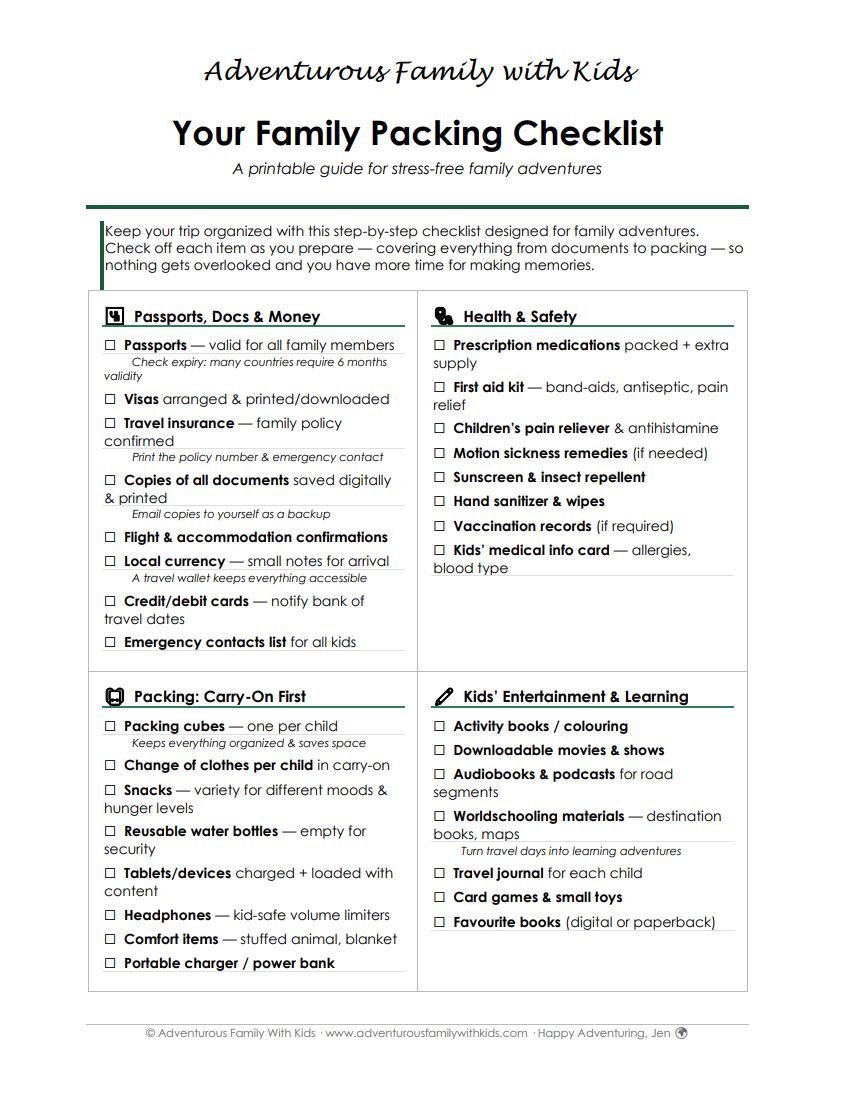
The Family Packing Checklist — Everything Packed, Nothing Forgotten
You're three hours from takeoff and someone can't find their passport. The kids' tablets aren't charged. You forgot motion sickness tablets. Again.
This checklist exists so that never happens to your family.
The Family Packing Checklist walks you through every stage of trip prep — from documents and health essentials to carry-on strategy and the final 24 hours before you leave. It's printable, straightforward, and built around the real chaos of traveling with kids.
What's covered:
Passports, Docs & Money — visas, travel insurance, digital backups, and everything your wallet needs before you go
Health & Safety — medications, first aid, kids' medical info cards, and sun protection
Carry-On Packing — the smart way to pack so your family survives the journey
Kids' Entertainment & Learning — screen time, worldschooling materials, and boredom-busters for every leg of the trip
Clothing & Gear — a no-brainer formula so no one overpacks or underpacks
Itinerary & Planning — confirmations, offline maps, and pre-booked must-dos
The Day Before Checklist — the final sweep that keeps departure morning calm
Print it once, use it every trip. No more last-minute scrambles, no more mid-flight "I can't believe we forgot that" moments…. just a family that shows up ready to explore.
Family Trip Planning FAQ
How far in advance should we start family trip planning?
For most family trips, start planning 3–6 months ahead, and as much as 12 months out for popular destinations during school breaks or for international travel. The early work is choosing dates and booking flights and lodging, which is where prices move most. You can finalize the itinerary, activities, and packing in the final few weeks. The bigger and more popular the trip, the earlier you'll want to lock the foundation.
How do we set and stick to a family travel budget?
Break the budget into five categories, transportation, lodging, food, activities, and the easily-forgotten costs like baggage fees, insurance, tips, and souvenirs. Add a buffer of 10–15 percent. To stick to it, divide the total by the months until your trip and automatically move that amount into a separate savings account. Turning one big number into a small monthly habit is what keeps families on track.
How do we plan a trip that works for kids of different ages?
Plan around the youngest child's limits and the oldest child's interests at the same time. Keep travel days and daily pace gentle enough for the little one, then layer in at least one activity that challenges the older kids. Give tweens and teens a say in part of the itinerary so they feel ownership. The one-anchor-activity-per-day structure works across ages because it leaves room for naps and down time without boring the big kids.
What tools make family trip planning easier?
Keep everything in one shared document (Google Docs or a shared note) with confirmations, addresses, and your loose itinerary. Add a flight price-alert tool, a packing app like PackPoint to generate a starter list, and a travel eSIM for international connectivity. The shared doc matters most, it's the single source of truth both parents can check, which prevents the most common planning chaos.
What should families do when a flight is delayed or a kid gets sick?
Plan for it before you go. Carry snacks, a battery pack, and spare clothes so a delay is bearable, and know your airline's rebooking policy. Pack a small medicine kit and look up the nearest clinic at your destination ahead of time. Buy travel insurance for big trips. A little prep turns the things that would derail an unplanned family into minor speed bumps.
The best part of having a family trip planning system is what it gives back: less time stressing over logistics and more time out exploring with your kids. Pick a destination that's been calling to you, open a fresh planning doc, and run these steps once. You might be surprised how quickly the trip you've been putting off starts to feel possible, maybe even close enough to start a savings transfer today.
Happy planning!
Jen