Affiliate Links may be used on this website, at no additional cost to you. This means I may earn a commission if you make a qualifying purchase. There is no charge to you. Thanks for supporting this website!
Haleakala's summit sits above 10,000 feet, and sunrise temperatures commonly drop into the 30s and 40s with wind on top of that. The National Park Service requires a timed-entry reservation for anyone entering the summit area between roughly 3:00 AM and 7:00 AM, and one reservation covers one vehicle, not one person. Children under two struggle with the 2:45 AM wake-up, kids two to four need low expectations, and ages five and up tend to remember the trip for years. Driving from Kahului takes 1.5 to 2.5 hours, longer from the west side, which is why families staying in Kaanapali or Kapalua often do better with sunset instead, since it requires no reservation and skips the coldest part of the day. A family bail-out rule, warm layers for every person, and a planned midday nap turn the early start into a trip highlight instead of a miserable morning.
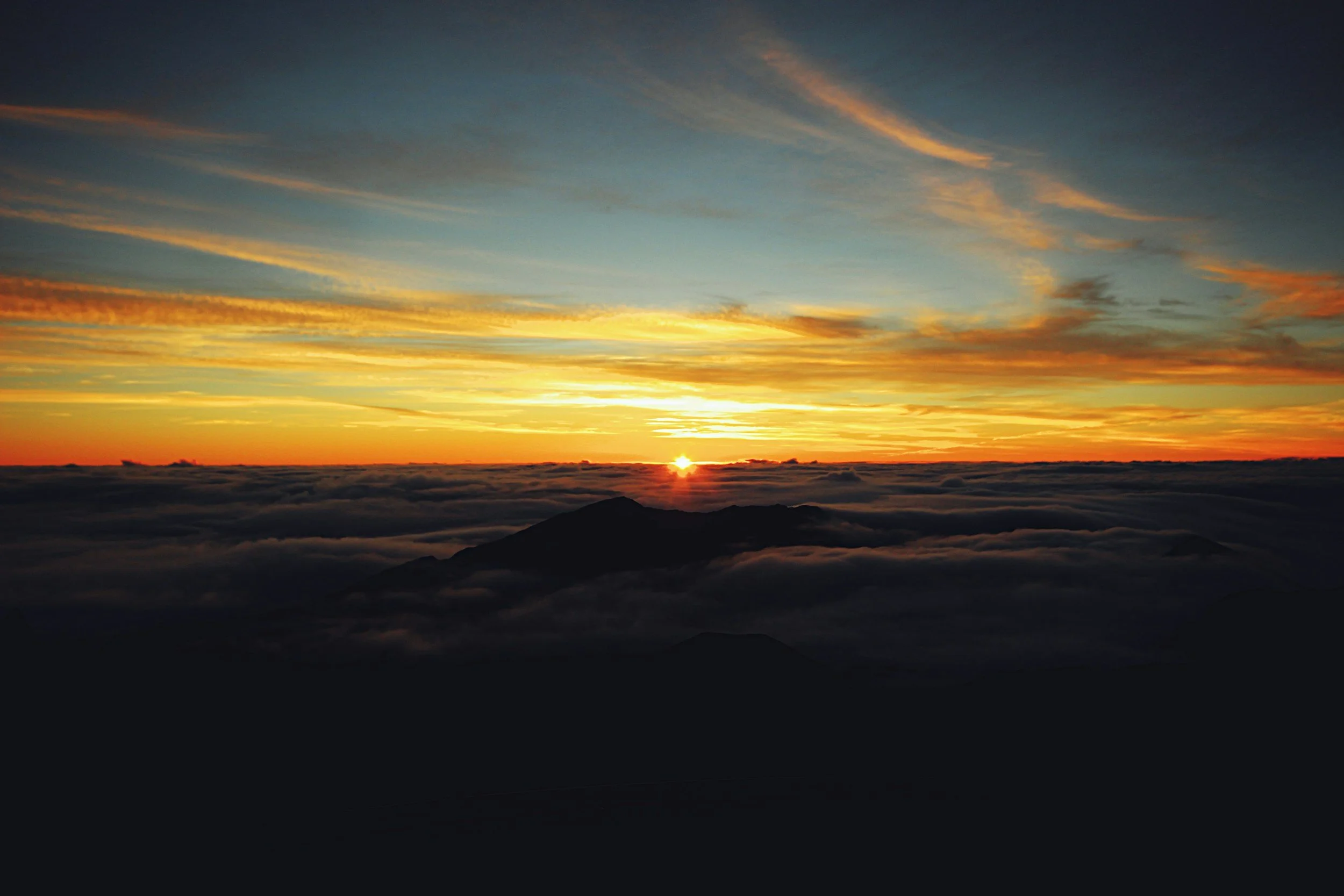
The summit of Haleakala sits above 10,000 feet, and at 5:30 in the morning it can hover near freezing with wind on top of that. Your kids will be standing in a dark parking lot in Hawaii, shivering, roughly three hours before they'd normally open their eyes. Plan for that one fact and a Haleakala sunrise with kids goes from miserable to the story they tell for years.
Here's the full process we'd follow, in order: book the reservation, pick the right day, pack warm, build a wake-up timeline backwards from sunrise, drive the summit road without a carsick kid, and then salvage the rest of the day. We'll also cover when to skip sunrise entirely and go at sunset instead, because for some ages that's the smarter call.
Sunrise reservations are mandatory and release on a rolling schedule
The National Park Service requires a timed-entry sunrise reservation for anyone entering the summit area between roughly 3:00 AM and 7:00 AM. No reservation, no entry. Rangers check at the gate, and they turn people around. This is the single most common way families blow the whole plan.
Reservations release on a rolling window well ahead of your date, with a smaller batch of last-minute spots released a couple of days out. Check the official Haleakala page on nps.gov for the current booking window, the reservation fee, and the separate park entrance fee, since those change and we'd rather you see the real number than a stale one from a blog post.
A few things worth knowing before you click:
One reservation covers one vehicle, not one person. Book by car, not by headcount.
The name on the reservation needs a matching photo ID at the gate. Whoever books should be in the car.
Your park entrance pass (or America the Beautiful pass) is separate from the sunrise reservation.
The same entrance receipt is good for three days, so you can hike Pipiwai or come back for sunset on the same ticket.
Set a calendar alarm for the morning the window opens. Popular dates during school breaks go fast, and the last-minute release is a scramble.
Planning a Haleakala Sunrise with Kids: Children Under Two Struggle with the 3 AM Wake-Up; Ages Two to Four Need Low Expectations
Not every family should do sunrise, and we'd rather say that plainly than pretend the 2:45 AM alarm is charming for everyone. Here's how we'd break it down by age.
| Age | Sunrise verdict | What makes it work |
|---|---|---|
| Under 2 | Skip it, or go sunset | Carrier with a wind cover, car-seat sleep both directions, zero expectation they'll notice the sky |
| 2 to 4 | Doable, with low expectations | Transfer them asleep in pajamas plus a snowsuit layer, watch from inside the warm car, aim for 20 good minutes |
| 5 to 7 | Sweet spot if they sleep in the car | Let them pick a job (hot cocoa carrier, photo-taker), bring a headlamp, promise a big breakfast after |
| 8 to 12 | Strong yes | They'll remember it. Give them the camera, the weather app, and the altitude facts to narrate |
| Teens | Yes, with buy-in | Let them opt in rather than get dragged. The photos sell it |
If you have a mix of ages, the youngest sets the ceiling. One parent staying back at the condo with a toddler while the other takes the older kids is a completely reasonable split, and nobody's vacation gets ruined.
Plan to arrive 45 to 60 minutes before listed sunrise time
Sunrise at the summit lands somewhere between about 5:45 and 7:00 AM depending on the season. Look up the exact time for your date on the NPS site rather than guessing, then work backwards. We'd aim to be parked at the summit 45 to 60 minutes before the listed time, because the color show starts well before the sun clears the horizon and the good parking fills first.
Here's a sample schedule for a family staying in Kihei, assuming a 6:00 AM sunrise:
2:45 AM, Alarm for parents only. Load the car in silence: blankets, thermos, snacks, diaper bag.
3:15 AM, Move kids to the car in their pajamas with a fleece layer already on. Buckle, recline, let them sleep.
3:30 AM — Leave. Gas up the night before; nothing is open at this hour.
4:40 AM — Arrive at the park gate. Have ID and reservation ready on your phone with a screenshot, because cell service dies on the way up.
5:00 AM, Park at the summit or Kalahaku Overlook. Keep the engine running for heat while you wait.
5:25 AM — Get the kids dressed in the car, one at a time. Out you go.
6:00 AM — Sunrise.
6:40 AM — Back in the car before the exodus traffic builds.
Drive time from Kahului typically runs 1.5 to 2.5 hours to the summit. From Kihei or Wailea add 20 to 30 minutes, and from the Kaanapali and Lahaina side budget closer to two hours each way. That west-side drive is the main reason we tell families staying in that area to consider sunset instead. If you're still choosing a home base, our rundown of which part of Maui suits different family itineraries covers how much drive time each area really costs you.
Summit temperatures in the 30s and 40s demand layers, not beach towels
Summit temperatures commonly sit in the 30s and 40s Fahrenheit at dawn, and the wind makes it feel colder. Families show up in shorts and rental-car beach towels every single morning, and they leave early because they're freezing. Don't be that family.
What we'd put in the car the night before:
A base layer, fleece or puffy, and a wind-resistant outer layer for every person. Winter coats if you own them and can spare the suitcase space.
Hats and gloves for the kids. Ears and hands are where small bodies lose heat fastest.
Closed shoes with socks. No flip-flops, no bare toes.
Two blankets per kid, minimum. Cheap fleece throws from a Kahului big-box store work fine and can be left behind.
A thermos of hot chocolate and one of coffee. This is the morale item.
Snacks that survive a dark car: granola bars, bananas, dry cereal in a bag.
Headlamps or a phone flashlight. The parking lot and overlook paths are pitch dark.
Screenshots of your reservation, the sunrise time, and the park map. Download offline directions too.
Rental gear is an option if you'd rather not haul coats across the Pacific, and a handful of Maui shops rent summit jackets and blankets specifically for this. Our broader Maui packing list has the rest of the trip covered, and if you want something to tick off on paper, the printable family packing checklists in our shop are easy to adapt for a cold-summit morning.
If one kid can only tolerate 15 minutes outside, you still saw the sunrise. Watching the last half through the windshield with the heat on is not a failure.
Light snacks and car positioning prevent motion sickness on the switchbacks
Haleakala Highway climbs from sea level to 10,000 feet in about 38 miles, with a long stretch of tight switchbacks above the 7,000-foot mark. It's paved, well maintained, and not technically difficult, but the rhythm of the turns in the dark is a reliable recipe for a queasy stomach.
What helps, in rough order of how much difference it makes:
Give kids a light snack before leaving, not a full meal and not an empty stomach.
Seat motion-prone kids as far forward and as high as their car seat allows, and crack a window for cold air on the switchback section.
No screens or books on the climb. Looking down is the fastest way to trigger it.
Ginger chews or the chewable motion sickness tablets dosed before you leave, not after symptoms start. Ask your pediatrician about what's appropriate for your kid's age and weight.
Keep a gallon zip bag and wipes in the seat pocket. Just in case.
About altitude: 10,000 feet is high enough that some people get a headache, shortness of breath, or wooziness, and kids are not immune. The park advises against the summit for anyone with heart or respiratory conditions, and for most families the fix is simply to move slowly, drink water, and head back down if someone feels rough. Going down is the cure and it works fast.
Kids stay engaged longer when they have a job to do
A sunrise is roughly 20 minutes of truly spectacular color and then a lot of standing around. Kids who have a job stay engaged far longer than kids who are told to watch.
The glass-walled summit building offers the most shelter from cold
There are three main viewing areas: the Haleakala Visitor Center lot at 9,740 feet, the Pu'u'ula'ula summit building at the very top, and Kalahaku Overlook on the way up. The summit building has an enclosed glass-walled room, which is the single most kid-friendly spot on the mountain when it's cold. Get there early enough to claim window space.
Paths at the Visitor Center and summit are short, paved, and mostly flat, so a stroller technically works. We'd still skip it. A carrier is warmer for a small kid, frees your hands for the thermos, and handles the gravel and curbs better in the dark.
The crater shows its best detail in full daylight after sunrise
Don't leave immediately. The crater is arguably more impressive in full daylight than at sunrise, with the cinder cones casting long shadows across what looks like Mars. Walk the first ten minutes of the Sliding Sands trail from the Visitor Center lot for a view down into the crater, then turn around. It's steep coming back up at altitude, so ten minutes down means twenty minutes up.
Ask a ranger about the nene, the Hawaiian goose, and about the silversword plants growing near the summit. A scavenger hunt format works well here if your kid responds to a checklist, and our printable scavenger hunt clue cards can be rewritten for volcano finds in about five minutes the night before.
Plan a midday nap upon returning; everyone will crash by 10 AM
You'll be back at your condo between 8:30 and 10:00 AM with kids who have been awake since 3:00 and a parent who drove switchbacks in the dark. Everyone is going to crash. Plan for it instead of fighting it.
Our preferred pattern: a big hot breakfast on the way down in Makawao or Pukalani, then back to the room for an unapologetic midday nap for the kids and the adults. Pick up the day around 3:00 PM with something low-effort and water-based. A calm beach afternoon is ideal, and the beaches our kids rank highest for little swimmers are the right energy level for a post-sunrise day.
What we would not schedule on sunrise day: a boat trip, a long drive to Hana, or a first-time activity that requires focus. If you're mapping a full week, the seven-day Maui plan we use with kids shows where a summit morning fits without wrecking the day on either side.
Sunset requires no reservation and skips the cold; midday offers the clearest views
Sunrise gets the fame, but it's not automatically the best version of this trip for a young family. Here's a plain comparison.
| Factor | Sunrise | Sunset | Midday |
|---|---|---|---|
| Reservation needed | Yes, timed entry | No | No |
| Wake-up cost | Brutal (2:30–3:30 AM) | None | None |
| Crowds | Heaviest | Moderate | Lightest |
| Cold | Coldest of the day | Cold but milder | Cool, often pleasant |
| Crater visibility | Dark until the sun clears | Full daylight into golden hour | Best for hiking and photos |
| Best for | Kids 8+ and families who want the bucket-list version | Toddlers, preschoolers, west-side stays | Hiking-focused families, nap-schedule protectors |
For families with kids under five, or anyone staying in Kaanapali or Kapalua, we'd pick sunset nearly every time. You get the same otherworldly crater, the same color, the stars coming out after, and nobody loses a night of sleep. Stay for astronomy after dark if the kids still have gas in the tank. The one real tradeoff is the drive down in the dark, which is slower and requires a driver who is fresh.
Set a family bail-out rule in advance and use it guilt-free
Set a family rule in the car on the way up: if anyone is truly miserable, we watch from the car and then we leave. Saying it out loud beforehand takes the pressure off everybody, including you.
Signs it's time to call it: a kid who can't stop shivering after being bundled, a headache that doesn't ease with water, or a meltdown that's clearly exhaustion rather than mood. Driving down 3,000 feet fixes altitude symptoms quickly, and a warm car fixes most of the rest.
Two more scenarios worth planning for. If the summit is socked in with clouds, you may see nothing at all, and that happens. Check the summit webcam and the park's weather page the night before and again before you leave; the gate staff won't refund a cloudy morning. And if your reservation window sells out entirely, a guided van or bike tour includes summit access, which is a legitimate workaround for families who'd rather not drive the switchbacks at 4 AM anyway. You can usually find those through tour booking platforms if the NPS window has closed on you.
FAQ
Is the Haleakala sunrise with kids worth the early wake-up?
A Haleakala sunrise with kids roughly six and up works well, yes. Standing above the clouds while the sky turns orange is the kind of thing children describe years later, and the altitude and scale of the crater land differently on a kid than any photo does. For toddlers and preschoolers, the math shifts, and sunset at the same summit delivers most of the payoff without the 3 AM alarm.
How far in advance should we book the sunrise reservation?
Book the morning your date opens in the NPS rolling window, which is typically weeks ahead rather than months. A smaller batch of spots releases a couple of days before each date for anyone who missed the first round. Check nps.gov for the exact window and current fees, and set an alarm for the release time.
How cold does it get at the Haleakala summit?
Expect the 30s or 40s Fahrenheit at dawn with wind on top of that, which is a 40 to 50 degree swing from your beach condo. Pack a base layer, fleece, wind shell, hat, gloves, closed shoes, and blankets for each kid. Families underpack for this more than any other part of the trip.
Can we bring a stroller to the summit?
Technically yes on the paved paths at the Visitor Center and summit building, but a carrier is better. It keeps a small child warmer against your body, handles curbs and gravel in the dark, and leaves your hands free. Save the stroller for the beach.
What if our kid falls asleep and misses the sunrise?
It happens constantly, and it's fine. Wake them for the ten minutes around the actual sunrise, let them see it from the warm car if that's what it takes, and head down. You still gave them the mountain, and you still get the photo.
Check nps.gov for your reservation window before anything else
Open nps.gov, find your dates, and check when the sunrise reservation window opens for them. That one task gates everything else, and it's the piece families leave until too late. Once it's locked, the rest is layers, a thermos, and a willingness to let the afternoon be lazy. Maui will still be there at 3 PM, and a Haleakala sunrise with kids at dawn is the kind of thing that makes a family trip feel bigger than a vacation.
Happy Adventuring!
Jen